Podcast
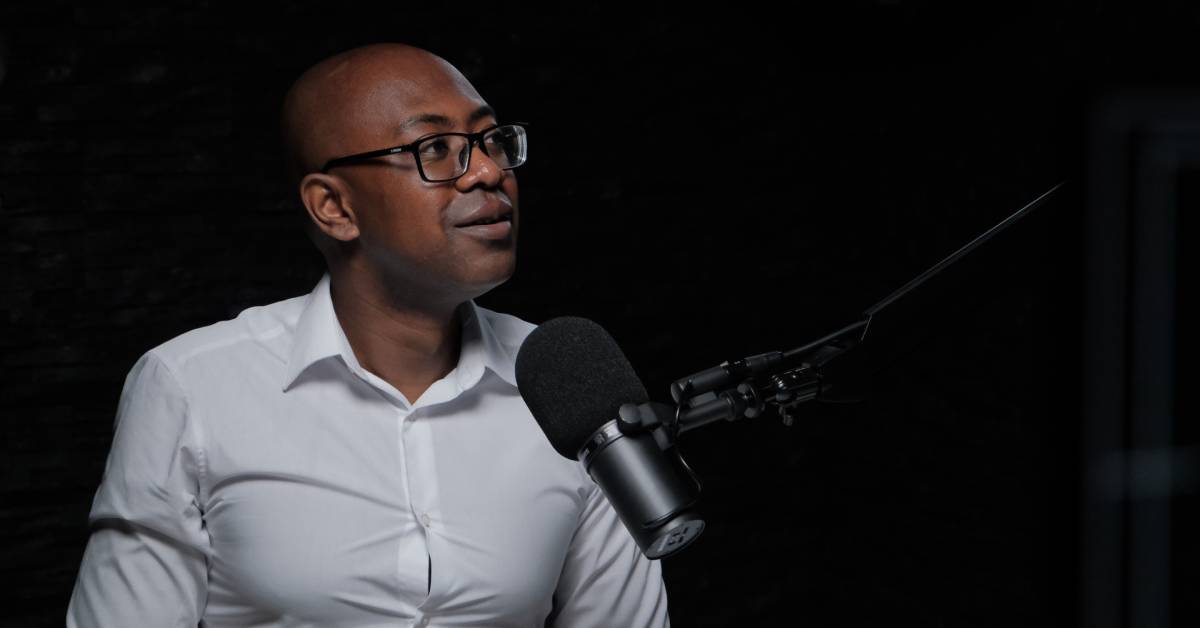
“We Trust New Employees with Data Every Day. Why Not Agents?” says Brandon Ash, Microsoft
April 30, 2026
Brandon Ash, Director of Solution Engineering at Microsoft, shares how enterprise leaders can navigate the AI era by building governed, unified data foundations. He explains why the semantic layer is more critical than ever, how OneLake enables a “skunkworks with guardrails” approach, and why customers who embrace partners go further, faster.
This podcast will answer:
- What’s holding executives back from AI, and how does semantic debt compound the problem?
- How does Fabric bridge the gap between analytics and operational decision-making?
- Why should you think of AI agents as just another employee to onboard?
Watch the whole interview:
Read the podcast as an interview:
(The interview was shortened and edited using ChatGPT
Mark Kohout: Hello and welcome to this Adastra podcast. My name is Mark Kohout, and I lead the North American Governance Practice for Adastra, a global data, AI, and cloud systems integrator. We’re coming to you today from Atlanta at Fabric Conference 2026. Joining us is Brandon Ash, Director of Solution Engineering at Microsoft. Welcome, Brandon.
Brandon Ash: Thank you. Glad to be here.
Mark Kohout: In this role, Brandon works closely with enterprise leaders to translate business priorities into practical technology strategies, connecting organizations with the right Microsoft experts, resources, and programs to support data and AI initiatives. He plays a key role in orchestrating collaboration across Microsoft teams and partners, helping customers navigate complex transformations with the guidance, technical expertise, and strategic support they need. Why don’t we start with a little bit about you? Can you share your journey at Microsoft and what led you to this role?
Brandon Ash: Absolutely. It’s been a fun ride. I’m about 16 years into the tech and data space. I’m a data nerd by nature.
Mark Kohout: The enthusiasm is there.
Brandon Ash: Oh, absolutely. I’ve always been naturally curious. Even as a teenager, I was the one using Excel to organize spreadsheets for school and volunteer opportunities.
Mark Kohout: The go-to guy.
Brandon Ash: Absolutely. Data and analytics was a natural fit. I got my start in consulting, doing visualization and semantic layer work. This was before Power BI existed, so I used QlikView back in the day, then moved on to learn Kimball data warehouse modeling and good database design. I helped a number of clients build out their data warehouses and data estates, mostly on SQL Server.
Mark Kohout: I find it interesting that you started with the semantic layer, because it’s coming back into focus with the needs of AI for context.
Brandon Ash: One thousand percent. The semantic layer is more important than ever. Customers who’ve built that through tools like Power BI are most prepared for the era of AI. They may have parts of their data with that semantic layer, but a lot of times data is all over the place. That’s where the OneLake story comes in: unifying all that data, then building semantic intelligence on top of it.
Mark Kohout: Centralized governance around it as well. It’s interesting. You started at the endpoint, then went into the engineering of the guts.
Brandon Ash: Exactly. I came to Microsoft about six years ago. It was my first foray into sales, but my team isn’t really sellers. We’re technical advisors in the sales org. We help customers solve technical problems and be successful in the Azure space. We build trusted relationships because we’re not trying to sell them anything; we just want them to build solid architectures.
Mark Kohout: Identify what good looks like.
Brandon Ash: Absolutely.
Mark Kohout: Let’s take that customer perspective. Here at Fabric Conference 2026, we’re talking about enabling technologies like OneLake security, data segregation, and role segregation. When you’re working with executives, what’s top of mind for them? Which conversations about data and AI excite you most because of their transformational potential?
Brandon Ash: What I see a lot is customers who’ve built sprawling data estates where data is everywhere. They may have tried some governance and made attempts to bring it together, but there wasn’t the same push as there is now. They’re getting tremendous pressure to be on the frontier of AI, and they’re realizing they have a lot of catch-up to do.
Mark Kohout: Technical debt and governance debt.
Brandon Ash: Semantic debt, yes. Executives are saying, “It’s time to pay down that technical debt.” They’re asking how to position their organization in this ever-changing AI landscape, where new feature announcements come every week. They want a strong foundation to build upon.
A lot of customers are scared of AI. How do they know agents won’t expose sensitive data? Many don’t even have a handle on where all their data is. That makes unleashing agents against that data feel risky. What we hear over and over is: “We want to do more with AI. Our trials are exciting, but we’ve got to get our data estate in order.”
Mark Kohout: Do you find executives are taking a “cover the entire data estate” approach, or more of a skunkworks approach: taking a subset, building a platform, and running with that?
Brandon Ash: Traditionally, the skunkworks model has had a lot of advantages. Start small, show results, then expand.
Mark Kohout: Different success criteria. Fail fast.
Brandon Ash: Exactly. What’s different about Fabric and the OneLake story is that it enables you to do that skunkworks model against a foundation where everything is secured and governed at the base layer. You can unify data piece by piece, and it becomes an ever-growing platform. Over time, that enables any information you want to reason over to be at the fingertips of employees and AI agents.
Mark Kohout: You can take a precision, business-case-driven approach to adding to that.
Brandon Ash: Absolutely.
Mark Kohout: A big part of your role is acting as a bridge between Microsoft and customer leadership. How do you approach those conversations when they’re trying to shape their data and AI strategy? What concerns are you addressing at the C-suite level?
Brandon Ash: It depends on the organization. As a solution engineer, I’m always going to say “it depends.” But what I see is many organizations try to go at it alone. They want to figure out problems themselves without showing their cards to any one vendor. I understand wanting to be protective, but customers who have expert partners in their corner and build deep relationships with them end up going way further, way faster.
I have customers who deploy Fabric without involving us. That’s great, and they can have some success. But when we proactively reach out to help, a lot of times they say, “We’re going to figure it out.” Then a year down the road…
Mark Kohout: I hear an “until” coming.
Brandon Ash: Until things get out of hand. Suddenly they have a Fabric environment that wasn’t built with best practices. It becomes a management nightmare, and they have to re-engineer everything, setting them back six months to a year. They incurred technical debt they didn’t need to if they’d just utilized available resources.
Mark Kohout: I’m hearing “don’t suffer in silence.”
Brandon Ash: Exactly. Let Microsoft help you. Let your account team connect you with partners: preferred Fabric partners who do this every day with customers. You’re going to go further.
Mark Kohout: Consider your partners as an extension of your core team.
Brandon Ash: Absolutely. We can’t do what we do without partners. Microsoft’s strategy is partner-first. We go further when we do it together.
Mark Kohout: How important is Microsoft’s ecosystem in helping customers execute, move faster, and unlock value from their data platforms?
Brandon Ash: Microsoft has evolved from a software company to a platform company. Our analytics story shows that maybe more clearly than any other area. Fabric has its legacy in Power BI, which has been on the market for over ten years. But that was just visualization and the semantic layer. Then there were piecemealed portions: Data Factory, Synapse, Databricks. Individual capabilities you had to string together.
Bringing all of that into one governed, secured SaaS capacity where you can do whatever you need on the analytic side, all integrated: there’s no other platform that can do that the same way. Now we’re extending further into the operational side with real-time intelligence, the ontology story, and Fabric IQ. Plus enterprise planning features announced this morning at the keynote.
Now you have capabilities to understand past, present, and future, and respond to that. It’s not just intelligence for better decisions. It’s an agent with all that context that can actually make decisions based on parameters you set. Almost like another employee.
Mark Kohout: Just another identity, really.
Brandon Ash: Just another identity. Fabric is moving from just analytics to a complete analytic and operational platform.
Mark Kohout: Can you give an example of an operational application in Fabric?
Brandon Ash: An operational application makes real-time actions based on context from past, present, and future. In the keynote, they showed demos with Delta Airlines using the ontology and Fabric IQ. You can map out different entities: planes, baggage, pilots, ground crews. And show their interconnected relationships within Fabric.
Mark Kohout: And that’s governed.
Brandon Ash: All governed. The data might live in another cloud, shortcutted into OneLake, but it’s governed and secured because OneLake is the only way to access that data. Then you set parameters like: if visibility drops below a certain level, delay or cancel the flight. Agents know all those rules and relationships and make those decisions.
Mark Kohout: Within Fabric IQ?
Brandon Ash: Absolutely.
Mark Kohout: So as we transition to agentic workforces, we’re creating a bridge between analytics data and real-time decision-making.
Brandon Ash: That’s another conversation I have with customers: What do I do with agents being almost like employees? How do I ensure they only access appropriate data?
I ask them: when a new employee joins, are you concerned about their data access? Rarely, because you have that security model in place. When you think of an agent as just another identity in your Entra ID ecosystem, it becomes intuitive. You onboard that agent like you would an employee: set their permissions, roles, and authority.
The ontology is similar. How do you onboard a human employee and teach them your business? That’s the same thing with agents: teaching them how things interact and when to make certain decisions.
Mark Kohout: I was fascinated by grounding agents in historical business decisions.
Mark Kohout: Let’s talk about translating business objectives into solutions. Executives are concerned about which expertise is needed. What does the engagement between Microsoft experts and client teams contribute to building out needed expertise?
Brandon Ash: It’s a very competitive market for human talent. A lot of people aren’t necessarily on the cutting edge for this era of AI.
Mark Kohout: Or maybe theoretically literate but not hands-on.
Brandon Ash: Exactly. With that market scarcity, it’s a chance to rely on partners who have that precious, scarce talent. Customers who do that see the translation from business objectives to value the quickest.
Mark Kohout: It’s not just know-how, but know-how fast.
Brandon Ash: Exactly.
Mark Kohout: Microsoft offers various programs and funding initiatives. How do these help customers de-risk and accelerate their data and AI agendas?
Brandon Ash: I want to help customers know how to be customers. There’s a lot available from a program and investment perspective, but it’s hard for customers to navigate. When customers ask, “How can Microsoft invest? How can you help us get there faster?” we love that question. Those customers want to go further and deepen the partnership.
There’s so much investment available to help customers be successful and realize value. I’ve seen us do very creative things with partners and customers. The box we often think of is a lot bigger than customers realize.
Mark Kohout: For executives looking to advance their data and AI strategy, what advice would you give about building the right team, technology, and partnerships?
Brandon Ash: Find partners who can help you get there and build deep relationships with them. We go further together. The customers who have trusted advisors they bring into their organization, sometimes we tell them, “This isn’t good; we have to rebuild.” The ones who listen, take that advice, and accept the co-investment we bring to refactor and get on the right path: they go so much further.
Going into this era of AI that’s very unknown, you want partners like Microsoft and Adastra who have helped customers build data platforms for many years and have the platform you can count on for the next era. Those are the people you want in your corner.
Mark Kohout: This has been an insightful and direct conversation, Brandon. Thank you. I’m taking away a lot. What I called the “governance skunkworks” means the opportunity Fabric’s evolution with OneLake security offers companies: a fresh start to build out in a stepwise fashion within a governed, controlled environment. I’m also taking away how agents link the analytical and operational worlds.
Thank you for letting our audience know that there’s a secret weapon in working with extended teams of integrators, partners, and providers like Microsoft. Don’t suffer in silence.
Brandon Ash: Absolutely. It was a pleasure.
Mark Kohout: To our audience, if you’ve enjoyed today’s discussion, please like and subscribe for more insights on data, AI, and partner-led innovation. Thanks for listening, and so long for now from Fabric Conference 2026 in Atlanta.