Insights
What’s Behind Fabric Projects at Adastra? People, Know-How, and Everyday Work
February 25, 2026
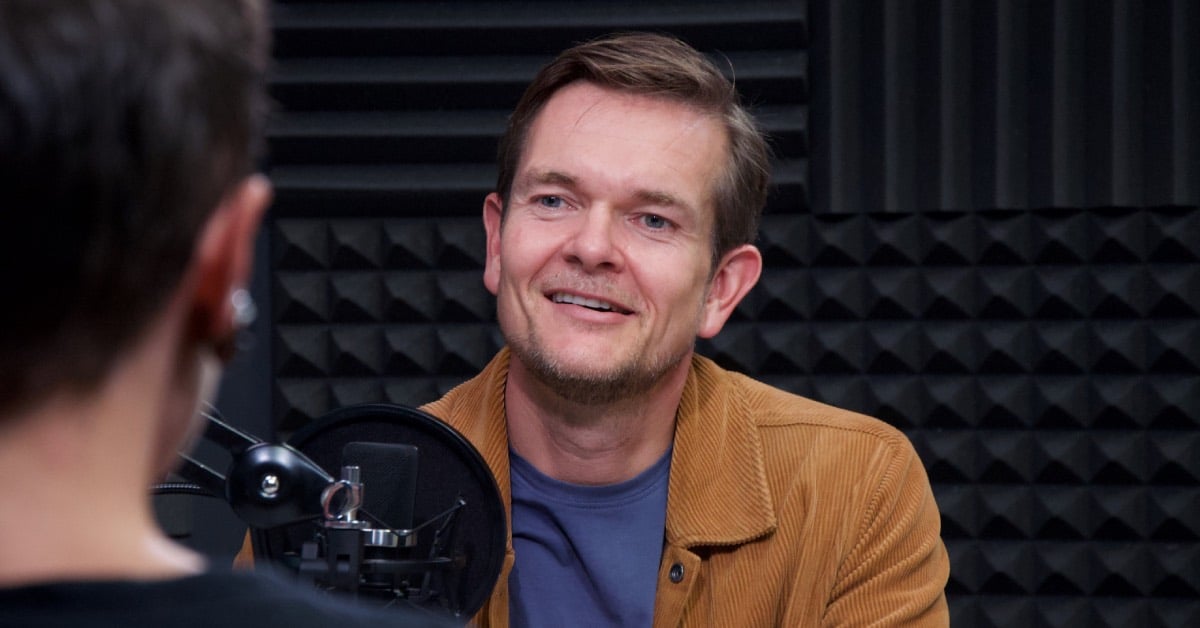
Interview with Martin Rys, leader of Adastra’s Fabric team
Microsoft Fabric has just celebrated its second anniversary. Since its official launch on November 15, 2023, at the Microsoft Ignite conference, it has become one of the fastest-evolving data platforms. We spoke with Martin Rys about how Fabric is being adopted by customers, what it delivers in practice, and how the Fabric team at Adastra operates.

Martin Rys, Competency Leader – Azure Data Analytics, Adastra
Martin, Adastra has one of the largest Fabric competencies on the market. What does your team look like today?
The Fabric team is part of the Azure Data Analytics competency, which focuses on implementing data solutions based on Microsoft technologies.
Over the past two years, we have focused strongly on Microsoft Fabric because we see it as a highly prospective platform. As a result, most of the competency team is now primarily dedicated to Microsoft Fabric. In the Czech Republic, we currently have 11 senior architects with Fabric certifications and several years of experience implementing a wide range of data and analytics platforms across different technologies, including SQL Server, Synapse, Databricks, Snowflake, Power BI, and others. Every team member has an overview of all Fabric components, while at the same time specializing in selected components and functionalities (e.g., Data Warehouse, Data Lakehouse (Spark), Real-Time Intelligence (Eventhouse), Power BI, Governance, etc.).
In practice, during project delivery, senior architects from the Fabric team are responsible for the overall solution architecture and collaborate on development with experts from other competencies, most commonly data engineers (SQL, Python programming) and analytics engineers (Power BI).
Thanks to the experience of our architects, we are able to support customers at any stage, from initial workshops to the complete implementation of any solution.
How does the competency operate? What activities help you stay ahead?
The competency ensures and supports a wide range of activities, primarily education, marketing and sales activities, project activities, and partnerships with Microsoft. We see our motivation and goals as follows:
- Education
- Motivation: Every company depends on the quality of its people. A consulting company like Adastra especially so.
- The goal is to have top experts with relevant certifications on our team.
- Marketing activities
- Motivation: We need to be visible. We must show customers what we are good at and convince them that they want to work with us.
- The goal is to make customers aware of us.
- Business activities
- Motivation: We must be able to support sales effectively. The architect plays a key role in successful customer negotiations and in any proposal.
- The goal is for architects to be able to describe the offer and, during business negotiations, to engage and convince customers of the solutions we offer.
- Project activities
- Motivation: We must deliver projects efficiently. The architect is key to designing relevant solution architecture and ensuring its implementation.
- The goal is for architects to be able to effectively enforce the proposed architecture both within the internal team and in discussions with customers. Architects must be able to design architecture that meets customer needs while respecting technical standards and trends.
- Partner activities
- Motivation: Partnership with Microsoft is essential to support all our activities.
- The goal is to develop a partnership with Microsoft, and the architect participates in a wide range of activities, including arranging cooperation on business and project activities, preparing funding applications, etc.
For me, the importance of competence lies primarily in ensuring the continuous education of team members so that they are top experts in their field. We actively track new developments and continuously expand and deepen our knowledge, which is essential given the constant stream of new Fabric features.
How exactly do you approach education within the team?
Education is built on four key activities – certifications, knowledge sharing, R&D, and courses and conferences.
I see certifications as a basic validation of expertise. At the same time, they are required by some customers and are also necessary for our partnership with Microsoft.
For knowledge sharing, the Fabric team meets regularly to discuss topics that interest us, such as project experience, R&D outputs, or insights gained from studying new features.
By R&D we mean more extensive project-type activities during which we research a selected area. For example, we have explored comparisons of individual Power BI storage modes and options for their optimal use, as well as variants of near-real-time data processing in Eventhouse and Lakehouse.
Currently, we are researching how to effectively use Copilots and data agents for CWYD (Chat With Your Data) . That is, enabling users to ask questions about data stored in Microsoft Fabric.
Team members also have opportunities to attend professional seminars and conferences. Particularly valuable is the regular Fabric Engineering Connection with Microsoft experts. We also had the opportunity to attend professional conferences such as Microsoft Ignite, Microsoft Fabric Community Conference, Microsoft Copilot & AI Agents Summit, and Microsoft Envision.
You’ve also spoken at several conferences. Which ones do you consider the most important?
We also prepared the full program and talks for the full-day Microsoft Fabric Prague 2025 conference organized by Adastra. Across three parallel tracks, we delivered twelve one-hour sessions focused on various Fabric components. I truly appreciate the approach of all presenters, as for many of them it was their first experience speaking in front of such a large audience.
We were also joined at the conference by Lars Andersen, Senior Program Manager at Microsoft, and one of the leading Fabric experts in Europe.
What skills and other expectations do you have of Fabric team members?
When selecting people for the team, we focus on the following criteria:
- Experience with implementing complex data and analytics platforms
- Perfect knowledge of data warehouse implementation principles, relevant architectures, and technologies
- Active interest in continuous learning
- Ability to effectively support the business process, lead customer discussions, and prepare proposals
- Ability to present and write articles
If you are interested in Fabric and have experience with data platforms, we are looking for new, proactive colleagues who want to learn, share what they learn with other team members, and implement Fabric projects for customers.
So, candidates should already be quite senior. What types of certifications do team members typically have?
Each team member holds at least one of the DP-600 or DP-700 Microsoft Fabric certifications. Some also hold additional certifications in Azure Data & AI, Power BI, or SQL.
I’m pleased to see that interest in Fabric is growing in other competencies as well, and the number of certified experts in these teams is increasing too.
Let’s move on to your day-to-day work with customers. What do companies most often ask for when it comes to Microsoft Fabric?
- Implementation of a new data platform – customers have fragmented or outdated solutions and want modernization based on cloud architecture, choosing Microsoft Fabric.
- Extension of existing platforms – customers use Databricks, Synapse, or Snowflake and want to add Fabric for reporting, self-service BI, CWYD, or real-time analytics.
- Transition from Power BI to full Fabric usage – customers who previously used Power BI, moved to Fabric capacities, and now want to leverage additional Fabric components (Data Engineering/Data Lakehouse, Data Warehouse, Real-Time Intelligence, Data Science).
In practice, customers often start with Fabric, so we also offer them cooperation on activities that we believe are necessary to carry out before the actual implementation of the solution in Fabric. These include, for example, specifying the Fabric organization, cost management, solution adoption, etc.
What do customers value most about working with the Fabric team?
Most often, I hear that our strengths are that we:
- understand the entire data architecture
- understand all Fabric components and have an overview of other technologies
- take a practical yet comprehensive approach
- draw on our experience, because we have already solved similar situations (or at least prepared for them through our R&D)
What is your role in projects? And what do you enjoy most about them?
As a competency leader, I need to understand all key Fabric components. However, I don’t have detailed knowledge in every single one, that’s where I rely on the team. My role is to bring a certain level of perspective to solution architecture design and to involve the right experts as needed. I strive to ensure that both the architecture and its subsequent implementation align with the customer’s expectations. Sometimes that also means patiently explaining to the customer why and how we want to approach certain things.
What I enjoy most is collaborating with smart people who are passionate about their work. I also always look forward to the moment when, after a longer implementation, the data and reports finally reach users, they start working with them in real life, and they are satisfied. Personally, I enjoy analyzing data, finding relationships within it, and explaining them to people in a way that brings clear practical value. Most recently, I was genuinely touched when a former colleague from Eurotel told me that, even after 30 years, he still uses a data analysis application I once created.
Has anything about Fabric surprised you?
When Fabric was launched, I was curious to see what it would bring. I spent many years implementing solutions on Microsoft SQL Server, and I remember that the transition to cloud technologies like Azure Synapse Analytics, Data Factory, or Data Explorer didn’t excite me much. That’s why I was pleasantly surprised that Microsoft managed to unify so many technologies into a single platform. Today, Fabric is, right after SQL Server, my favorite environment.
I must confirm Satya Nadella’s words from Build 2023:
“Fabric is perhaps the biggest launch of a data product from Microsoft since the launch of SQL Server.”
What do you do when you’re not working on Fabric?
Fabric is extremely broad, and new features are coming at a rapid pace. It’s demanding to keep up. That’s why I appreciate the chance to switch off and disappear into the mountains with friends. And above all, I enjoy spending my free time with my two amazing granddaughters, who reliably remind me that there are priorities in life beyond data platforms.