Insight
Two Years Ago, the Euphoria Over Artificial Intelligence Emerged. Why Do Most Companies Fail to Utilize It Effectively?
October 8, 2024
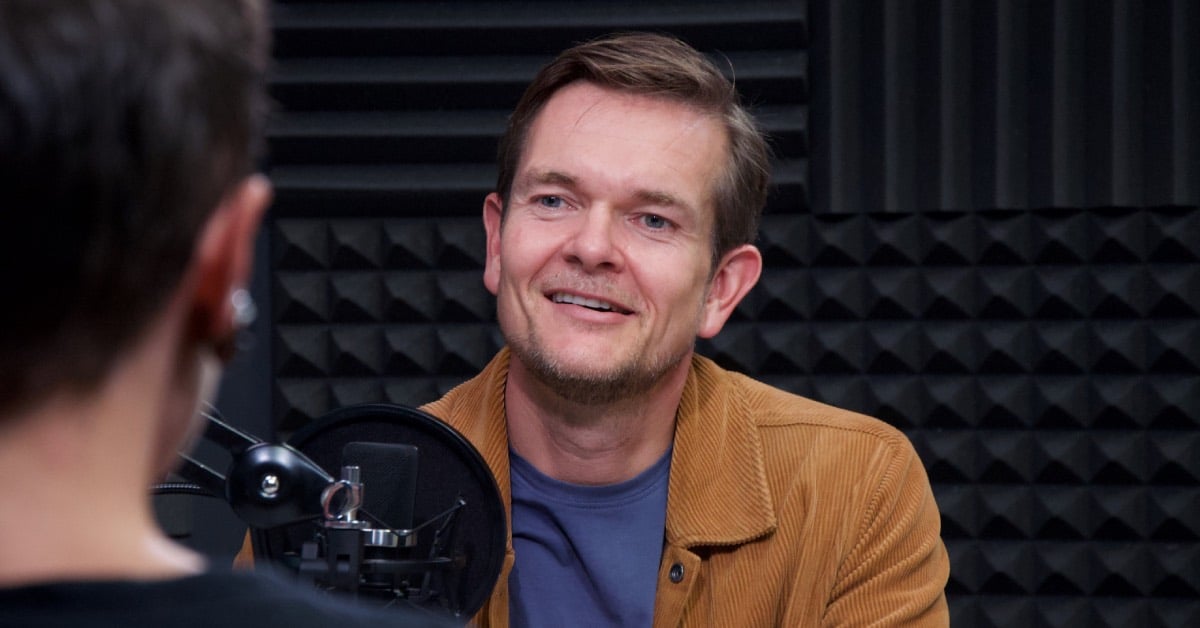
On November 30, 2022, the first version of ChatGPT was released to the public. Since then, artificial intelligence has gained momentum, and companies are trying to transform it from a cool toy into something they can use in business. So, how successful are companies in converting artificial intelligence into value? How will European regulation affect them? Ondřej Vaněk, Chief AI Officer at Adastra, discusses these issues in the podcast.

Ivana Karhanová: Artificial intelligence has been experiencing a hype for two years now. You oversee global projects at Adastra, dealing with AI all over the world. What have companies learned since then?
Ondřej Vaněk: Thanks for the great question. Yes, “hype” is very apt here, because some companies really perceive the movement around generative artificial intelligence as just a big fuss. But on the other hand, many companies now recognize that AI technology has reached a point where it is mature enough to genuinely deliver value, something AI researchers have been talking about since the 70s. At Adastra, we have been working with AI for a long time, about 10 to 15 years, and during that time we have integrated many methods and technologies under the broader umbrella of artificial intelligence. We are now welcoming the wave of generative AI, which enables the efficient use of large language models and general-purpose models not only in text but also for images, videos, and speech. We fully support this trend and help companies with their adoption. But, as you rightly noted, for some companies, adoption may be easier, while others may face greater challenges. When we look at who is successful in adoption, we see that these companies excel in innovations. Applying AI to business can be seen as a new type of innovation that has its specifics—like the need to work with data stored in the cloud and overcoming human fears of AI. Companies that have well-established processes for innovation and digital transformation and work with competent partners can adopt AI effectively, both financially and in terms of value. Conversely, those companies that launch AI projects without a clear strategy and invest financial resources without prior consideration of benefits often end in failure.
Ivana Karhanová: You mentioned one important thing. Companies that can innovate, what does that mean? And what does a company that cannot innovate look like?
Ondřej Vaněk: From our perspective, innovation is a process that has several aspects. The main difference is the uncertainty. Innovation moves business into uncharted waters and often uses technology that does not have many deployments or case studies. Part of the deployment process is mapping these uncertainties and risks and working with them. Companies that recognize a budget, uncertainty, risks, and added value and can maneuver these three components well, in my view, can innovate.
Ivana Karhanová: Can we say that these companies are courageous in a way?
Ondřej Vaněk: I suppose so. For me, innovation is an integral part of business, especially in today’s world.
Ivana Karhanová: Many projects in companies still do not yield results. They often perceive it as wasted money. According to Gartner, less than half of the AI-based projects even make it to production. Yet, Adastra manages to get three-quarters of projects into production. What makes you twice as successful as the rest of the market?
Ondřej Vaněk: I think that aspect has two sides. One thing is that many companies are used to making some PoC, prototypes, and sometimes they slip into the mode of doing PoC for PoC’s sake. They are not ready to move the project forward. They test the technology; they test an idea. Often it is in some isolated environment. By that, the proof of concept is completed, just getting that prototype into production, so-called maintaining productivity, is a painful journey because getting something into production means reliability.
The tool or service must operate long-term and must be well adopted by users. I verify that the technology works, but mainly, that it can deliver value. And that is often forgotten in those PoCs, that the ROI is not measured. Companies often have, I would say, incomplete expectations, when they say: Yes, the prototype cost me maybe tens of thousands of dollars, but productivity can cost hundreds of thousands of dollars, because, for example, enterprise companies have very demanding security policies, complicated infrastructure, or many different user groups, etc. So, it’s no longer about the AI algorithm, and additionally, the prototype often involves a limited set of users, etc. and the right work with the human component and proper adoption is also crucial for success.
Ivana Karhanová: Can you think of a specific example that we could use to illustrate this?
Ondřej Vaněk: Many companies, for example, started using their own versions of ChatGPT for internal needs, such as processing corporate documents. This enabled them to streamline access to information. For instance, in a design department, an AI-based assistant can quickly find relevant data from extensive manuals, greatly increasing productivity and reducing errors. However, extending this tool across the entire knowledge base of the company can pose challenges with indexing and properly searching for information, especially if the data are poorly accessible or inconsistent. Adastra uses its experience to anticipate and solve these issues, ensuring a smooth process from implementation to adoption of technology.
Ivana Karhanová: How does anticipating and planning affect your ability to complete projects?
Ondřej Vaněk: Yes, our ability to anticipate and plan carefully is key. It allows us to bring up to 75% of our prototypes to production. We go through several phases—from design, analysis, pilot deployment, to final wide-scale deployment. At each stage, we carefully monitor investments, uncertainties, and expected value, and adjust subsequent steps accordingly. If a project does not meet the set criteria, it can be halted to avoid unnecessary expenditures.
Ivana Karhanová: How does the approach to artificial intelligence differ between the Czech Republic and North America?
Ondřej Vaněk: In the USA, the approach to innovation and artificial intelligence is more proactive and less constrained due to greater availability of capital and a general willingness to take on greater risks. This leads to faster adoption and integration of new technologies. In contrast, in the Czech Republic, the approach is more conservative. Companies are more cautious and thoroughly weigh potential risks and costs. This approach leads to a more careful and often gradual introduction of innovations, allowing for more efficient use of resources and reducing the likelihood of failure. We may be more cautious, but our strategy is oriented towards sustainable development and real added value.
Ivana Karhanová: Does this experience help you in managing the delivery of AI projects?
Ondřej Vaněk: Yes, in America it is easier because capital is cheaper there. We are used to conservative estimates and careful planning, which in the USA means that we can respond more quickly to investment opportunities. At the same time, however, we are exposed to strong global competition, which forces us to maintain high quality of our services.
Ivana Karhanová: What impact does current AI regulation, such as GDPR and the upcoming EU AI Act, have on your work?
Ondřej Vaněk: Regulation adds complexity, especially since we have to revise existing AI projects and adapt them to new rules. Stricter data and privacy regulations may slow down some projects, but we are prepared and planning how to proceed in compliance with new regulations. It is interesting that we anticipate what the requirements for audits and certifications in high-risk areas will be, allowing us to prepare better than the competition.
Ivana Karhanová: What impact does the differing levels of regulation and market conditions have on your global operations?
Ondřej Vaněk: Our global presence requires flexibility and the ability to adapt to various regulatory and market conditions. In countries with less stringent regulations, we can be more aggressive in innovations, while in Europe, where regulations are stricter, we must be more cautious and focus more on compliance. This global presence gives us a broad overview of how to adapt AI strategies to meet local requirements while remaining in line with our global standards of quality and safety.
Ivana Karhanová: How does Adastra AI manage to integrate these diverse requirements into its global approach?
Ondřej Vaněk: As a global company with deep-tech competencies, Adastra AI uses its international experience to design solutions that are tailored to the needs and regulations of individual markets. We are strong in business consulting and technological delivery, but we have also expanded our services to include regulatory and legal consulting to ensure that our solutions are not only innovative but also fully compatible with the relevant legal standards. This allows us to provide comprehensive and consistent services in all the markets we operate in.
When launching projects, it is important to consider whether they fall into the high-risk category. Some projects may exhibit high-risk elements, but with minor adjustments, we can eliminate these risks and move the project to a lower-risk category. This simplifies the entire process from approval to implementation and reduces the costs of compliance. For each project, we carefully monitor capital requirements, assess potential risks and business value, and include regulatory regulations from the planning stage. This allows us to effectively manage the project and ensure its success.
Ivana Karhanová: What role do major technology companies like Microsoft, Amazon, and Google play in the development of AI?
Ondřej Vaněk: These companies are key players in the AI field, their significant investments in research and development have enabled the creation of generative AI technologies, such as GPT. Companies like Microsoft, Amazon, and Google not only develop and refine these technologies but also provide substantial infrastructural and cloud support. Their cloud services enable the integration of AI into a wide range of applications, supporting innovation and digitization. Thanks to these platforms, we can offer comprehensive solutions that include AI, tailored to the needs of our clients. These companies also provide financial support for pilot projects, which significantly reduces initial investments and allows for faster experimentation and deployment of new solutions. Adastra collaborates with these giants, which allows us to access the latest technologies and best practices and helps us secure financial resources and support for our clients. The result is that when a project achieves success, it can be promoted as an example of successful innovation and a case study that demonstrates the benefits of our work and the technologies of our partners.
Ivana Karhanová: Says Ondřej Vaněk, Chief AI Officer at Adastra. Ondra, thank you for the interview and for visiting the studio.
Ondřej Vaněk: Thanks, Ivana.