Podcast
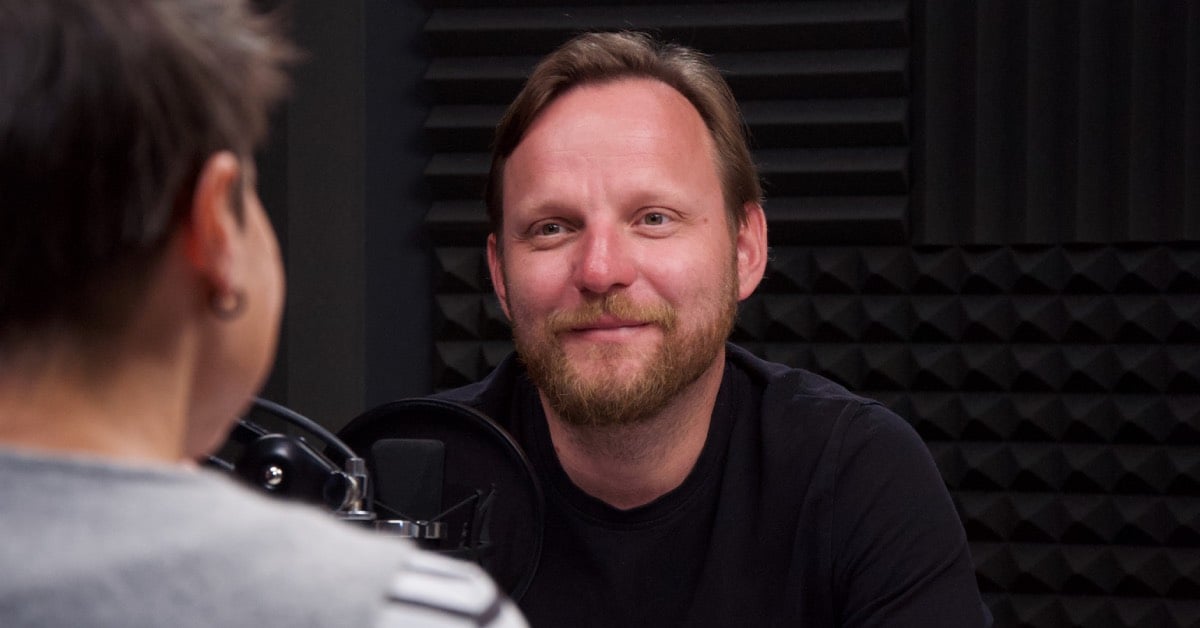
“Think of It as a Three-Layer Cake: Platform, Data, AI,” Says Glenn Remoreras, CIO, Breakthru Beverage Group
February 5, 2026
Glenn Remoreras, EVP, Chief Information Officer at Breakthru Beverage Group, shares how a cloud-first “platform, data, AI” architecture and executive-led AI readiness turn market pressures into value. He highlights migrating 300+ services to AWS, why the data layer is the most critical, risk-based guardrails, and quick-win pilots like Legal GPT and an AI Sales Coach.
- What does it take to build a foundation that learns fast and scales AI beyond hype?
- When is “good enough” data enough, and how can AI expose and fix the gaps?
- Which operating model and governance enable adoption without slowing delivery?
Watch the whole interview:
Listen to the podcast:
Read the podcast as an interview:
(The interview was shortened and edited using ChatGPT
Mark Kohout: Hello and welcome to the Adastra podcast. I’m Mark Kohout, and I lead the Governance practice at Adastra, a global AI, data, and cloud systems integrator. We’re coming to you from Las Vegas at AWS re:Invent 2025. My guest today is Glenn Remoreras, EVP, Chief Information Officer at Breakthru Beverage Group (BBG). Glenn is a strategic CIO and growth catalyst who has led global initiatives across Asia, Europe, Mexico, the U.S., and Canada in industries from CPG to manufacturing. He’s a Global Impact awardee and a founding member of the BRM Institute, known for building high-performance teams and using data, AI, and modern cloud platforms to drive measurable outcomes. At BBG, he’s advancing a cloud-first, AI-enabled strategy with Adastra and AWS, emphasizing AI readiness, leader education, guardrails, and the data and operating foundations that turn AI from hype into value. Glenn, thanks for finding time during a busy week, and welcome.
Glenn Remoreras: Thanks for having me, Mark.
Mark Kohout: For listeners new to BBG, how do you describe the business and your role?
Glenn Remoreras: Breakthru Beverage Group is a family-owned distributor with about $10B in revenue across 16 markets in the U.S. and Canada. I joined about nine months ago. The industry is shifting, with seltzers and zero-alcohol options, so we’re at an inflection point. Distribution is about efficiency and service, and technology, insights, and AI can make a real difference. My role is to be the change catalyst: build the tech foundation to scale change and help the business meet evolving expectations efficiently. It’s daunting and exciting.
Mark Kohout: What pressures pushed BBG to evolve, and which outcomes guided your tech strategy?
Glenn Remoreras: The pressures are industry-wide. Beyond consumer preference shifts, customer expectations for efficiency and service are rising, especially in the U.S. three-tier alcohol system where manufacturers don’t sell direct to consumers and distributors are the conduit to market. Top priorities:
- Operational excellence for cost efficiency.
- Customer excellence to meet changing expectations (including e-commerce).
- Differentiation so we remain the distributor of choice for suppliers. These anchor how technology helps.
Mark Kohout: You migrated over 300 on-prem services to AWS. How did that, and your data governance, set the stage for AI? Can you outline the architecture?
Glenn Remoreras: Moving to AWS was a “no-regret” decision. It’s more than shifting compute; AWS provides a toolbox for managing data and scaling AI. We use a simple “three-layer cake”:
- Platform layer: AWS, ERP, CRM, HR, converged and simplified.
- Data layer: unified, high-quality data across platforms.
- AI layer: models and use cases that rely on good data, plus embedded AI within platforms. Architecture now needs principles and flexibility because data and AI layers are evolving across vendors (AWS, SAP, Salesforce, Snowflake, etc.). Start with clear architectural principles to enable optionality and future plug-and-play.
Mark Kohout: Which layer needs the most emphasis?
Glenn Remoreras: The data layer. Scaling AI depends on data quality, access, and governance. We’re building the platform and an operating model with the business, think hub-and-spoke, so organization and process support the tech. That’s the biggest enabler for AI.
Mark Kohout: Let’s talk AI readiness. Beyond tech, what pillars matter: operating model, talent, change management, governance, security, compliance?
Glenn Remoreras: Three pillars:
- Tech readiness: platforms and data in place.
- People readiness: education and literacy. I like Ethan Mollick’s Leadership, Lab, Crowd framework:
- Leadership: educate executives on what AI is and what’s possible.
- Lab: invite leaders and teams to experiment.
- Crowd: bring the whole company along with L&D programs and role-specific AI primers.
- Governance and compliance: define guardrails aligned to company values, culture, and risk profile; iterate policies as external regulations evolve. Protect data and IP without stifling innovation.
Mark Kohout: You started with executive education, an AI day to explore the art of the possible. What did that look like?
Glenn Remoreras: Soon after I joined, I proposed dedicating time to AI at our executive meeting in Tampa. We partnered with AWS, Salesforce, and Snowflake to showcase relevant use cases and toured an Amazon fulfillment center to see AI at scale. About 35 leaders attended. I said success meant leaving more knowledgeable about what AI is and isn’t, not just with a to-do list. That mindset shift sparked use case ideas across departments, many now in development with support from AWS and Adastra. We started with leadership, moved into labs, and next year we’ll scale to the crowd.
Mark Kohout: How did constraints shape your path from lab to production? What guardrails resonated most?
Glenn Remoreras: We use a risk-based, iterative approach. Early on, we defined acceptable use to protect the company. As we learned, we matured policies. Legal and HR are key partners, and one of our first pilots was a Legal GPT because legal content is accessible and well-bounded. Our CHRO is pushing ambitious goals for AI learning and adoption. We evolve guardrails as we scale purposeful use cases, staying close to legal and regulation.
Mark Kohout: How do you prioritize AI use cases?
Glenn Remoreras: Two factors:
- Feasibility and viability given data readiness and platform maturity. Don’t force a high-impact use case before foundations exist; put it on the roadmap when it can scale.
- Business impact, including learning. Learning has tangible value because it accelerates future impact. We use a simple quadrant: do now with value; do later when foundations mature.
Mark Kohout: The CIO’s role sounds very much like a change agent.
Glenn Remoreras: Change agent and educator, and it extends beyond the company. I have 14-year-old twins in robotics who code, but even coding is changing. I plan to watch keynotes with them and encourage curiosity. Leaders should bring family, community, and mentees along. AI can help solve real problems like climate change and cancer, and humanity adapts. The difference now is speed; cycles are faster, so we must stay current and prepare the next generation.
Mark Kohout: Back to BBG, how have you organized for this?
Glenn Remoreras: We started scrappy, piloting use cases with partners. We hired a VP of Data and AI, Elton Martins (formerly NFL), to lead the data and AI effort. Next year, we’ll formalize an AI Center of Excellence and continue the extended-team model with partners like AWS and Adastra. New tools, like live coding, create a multiplier effect so we can deliver far more use cases with the right team, guardrails, and governance.
Mark Kohout: To bring this to life, can you share a couple of use cases?
Glenn Remoreras: Two examples:
- Legal GPT for faster, compliant access to legal information.
- AI Sales Coach built on our sell sheets and product knowledge to assist sales teams in the field. We have a pipeline we’ll accelerate as our data readiness matures.
Mark Kohout: Final question: What advice would you give CIOs who want to get AI-ready quickly?
Glenn Remoreras: Start with yourself. Define the role you’ll play: catalyst, educator-in-chief, change-maker, platform builder, or all of the above. Prepare your team and capabilities, line up the right partners, and build foundations so you can scale when ready. Our role is end to end, both a blessing (we see across functions) and a curse (expectations are high). Embrace the whitespace and lead the change.
Mark Kohout: Glenn, thanks for sharing your perspective on AI readiness and education, and for making it come alive. To our audience: if your team wants a low-risk first step on your AI transformation journey, reach out to Adastra and let’s make it happen together. If you found this podcast useful, please like and subscribe. So long from Las Vegas.