Podcast
“If It’s a Cancer Drug, Cross the T Five Times; If It’s AI-Developed, Cross it Seven,” Says Jon Steffey, Tolmar
April 23, 2026
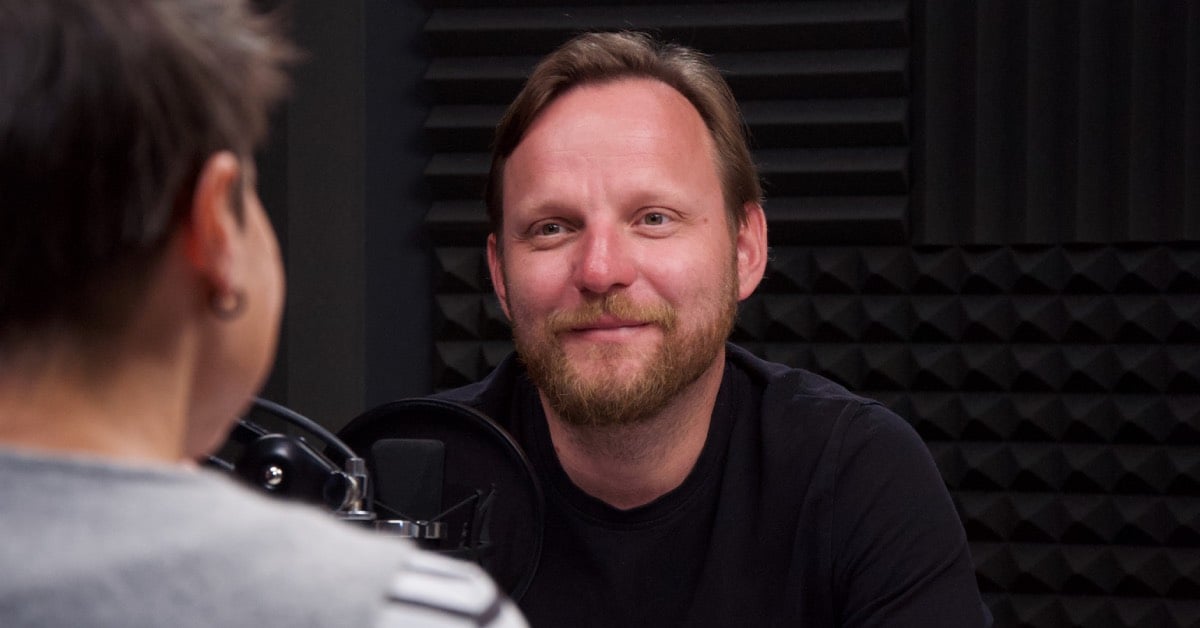
Jon Steffey, Senior Director of Enterprise Software and Analytics at Tolmar, shares how a unified data platform, risk-aware governance, and AI‑enabled workflows are helping a fast-growing, mid-sized pharma manufacturer modernize without losing sight of quality. He explains how Tolmar is digitizing manual processes, breaking down post‑M&A data silos, and using Microsoft Fabric and modern data platforms to move leaders from data overload and gut feel to more empirically grounded decisions. Drawing on experience across aerospace, medical devices, and pharma, he highlights why data is foundational to process control in regulated manufacturing and how to calibrate the rigor of controls to the real product and patient risk.
- How do you modernize a legacy, siloed data landscape in pharma while focusing on fundamentals like ingestion patterns, transformation, and governance instead of just chasing a single “killer” use case?
- What happens to decision‑making when leaders move from fragmented reports in multiple systems to a unified view of end‑to‑end manufacturing and quality data
- How can pharma organizations tune the rigor of their development and validation processes to the impact and risk of each use case, from low‑risk UI changes to high‑impact, AI‑influenced therapies?
Watch the interview:
Read the podcast as an interview:
(The interview was shortened and edited using ChatGPT)
Mark Kohout: Hello and welcome to this Adastra podcast. My name is Mark Kohout, and I lead the governance practice for North America at Adastra, a global data, AI, and cloud systems integrator.
Mark Kohout: We are coming to you from Atlanta at the 2026 PharmaCon conference. Joining me is Jon Steffey, Senior Director of Enterprise Software and Analytics at Tolmar.
Mark Kohout: Tolmar is a pharmaceutical company recognized internationally for advanced long‑acting injectable drug delivery. Tolmar has produced 22 marketed products across urology, oncology, and endocrinology, helping patients manage conditions such as central precocious puberty, advanced prostate cancer, and testosterone deficiency.
Mark Kohout: At its heart, Tolmar believes in being a strong ally to its partners, and most importantly to the patients and provider communities it serves. With more products forthcoming, Tolmar is laser‑focused on future growth. Jon focuses on the data enablement that powers new products and business areas.
Mark Kohout: Jon, a warm welcome to the podcast, and thank you for joining us in the studio.
Jon Steffey: Thanks, Mark. I am looking forward to the conversation.
Mark Kohout: Let us start with you. Can you share a bit about your background and what drew you to the intersection of data and analytics in pharma?
Jon Steffey: I think I started out as a nerd. My first love was baseball statistics.
Jon Steffey: Back before today’s fantasy sports platforms, I was the kid reading the newspaper every week, copying stats into spreadsheets. That attention to detail and love of numbers stuck with me.
Jon Steffey: I went to a small liberal arts school, got a degree in English and a degree in education, and taught high school for a while. But the inner geek was always there.
Jon Steffey: Over the last 30 years or so, I have worked in a startup doing web application development, in an engineering publishing company, and then a spin‑off focused on supply chain management. That is where I really moved into high‑tech manufacturing and supply chain.
Jon Steffey: Since then, my focus has been: how do we use data and appropriate emerging technologies to improve quality and performance in high‑tech manufacturing? I have spent time in aerospace, built a program for medical devices, and for the last few years I have been in pharma.
Mark Kohout: I am curious about the commonalities across aerospace, medical devices, and pharma. What links these industries?
Jon Steffey: They all require tight process control around manufacturing and everything adjacent to it because the cost of failure is so high.
Jon Steffey: If a jet engine fails, none of us want to be on that plane. So you put extra attention into every detail of the manufacturing process, not just at the original manufacturer but across the entire supply chain.
Jon Steffey: It is similar with medical devices, whether it is an artificial knee or, at my previous company, apheresis devices and bioreactors. You simply cannot have the one bad product. With coffee mugs, you can tolerate a defective one or two; with jet engines and bioreactors, you cannot.
Jon Steffey: Pharma is the same. The medicines going into our bodies must work correctly every time. That is the common thread. Data becomes the foundation for effective process controls. That has been one of my big learnings over the years.
Mark Kohout: Let us turn to Tolmar. What is your approach to enterprise software and analytics, especially given where Tolmar is in its growth journey?
Jon Steffey: I do not know if it is truly unique, but it is one of the things that drew me to Tolmar.
Jon Steffey: Over the last several years, Tolmar invested heavily in digitizing processes that were previously manual or paper‑based. We had strong manufacturing capabilities, but not always sustainable maturity because many processes were not digitized.
Jon Steffey: Since I joined, the opportunity has been to use data, modern data platforms, and AI to catch up and even leapfrog, especially for a midsize enterprise like Tolmar that has grown through mergers and acquisitions and evolved its product portfolio.
Jon Steffey: Leaning into digitization and data gives us a chance to accelerate our growth.
Mark Kohout: Many pharma companies struggle with modernizing legacy systems built over decades. Tell me about your approach to modernization. What are the keys to a successful journey from legacy to new capabilities and optimized processes? What does good look like?
Jon Steffey: You have to get the fundamentals right.
Jon Steffey: For me, good looks like being intentional about ingestion patterns, how we transform data, and getting governance right early. There is a temptation to chase a single killer use case and skip the foundational work.
Jon Steffey: We struggled with that at first. Our partnership with Adastra helped us course‑correct early in our modernization and platform‑building efforts.
Mark Kohout: It sounds like you are talking about things outside or adjacent to the core technical work, such as company change and new ways of working with data.
Jon Steffey: Exactly. It is a cliché, but organizational change management is often the hardest part.
Jon Steffey: Most of the technical challenges of standing up a modern cloud data platform are solved problems. That is not the hard part.
Jon Steffey: The hard part is: how do I bring my users along over the next six, 18, or 36 months? You have to be with them in understanding what problems we are trying to solve now and what we expect to solve in the future.
Mark Kohout: That really expands the role of someone focused on enterprise software. It is technical, but also about broader organizational impact.
Jon Steffey: In roles like mine, or any technology leadership role, it is more about understanding the business than understanding the technology.
Jon Steffey: I am not writing Python notebooks. I am spending time with other leaders, understanding their priorities and making sure our technology investments align with the company’s three to five year strategy, not just a single use case.
Jon Steffey: That is where I try to spend my thinking time: on aligning technology choices with business strategy, not on the code itself.
Mark Kohout: That sounds like visioning the future, together with other leaders.
Jon Steffey: Yes. You do not want technology to drive the business. I am excited about generative AI, like many listeners, but you cannot lead with technology. You have to lead with the business problem and let technology be the enabler.
Mark Kohout: You mentioned Microsoft Fabric. It sounds like you have put a unified data platform in place. Were you dealing with post‑merger data fragmentation? Have you enabled new capabilities by reducing fragmentation and unifying data?
Jon Steffey: That was one of our core objectives.
Jon Steffey: When I joined Tolmar, before the platform, we had good reporting but in silos. Manufacturing had data in one system, we had our ERP, a lab information management system, and other systems.
Jon Steffey: They did not talk to each other well. If we wanted to improve cycle times in parts of the manufacturing process, decision‑makers had to go into four or five systems and manually collate reports.
Jon Steffey: Building the platform to federate and unify data was a critical first step so we could have an end‑to‑end view of key processes. That has been the guiding principle.
Mark Kohout: Data silos are common, given how systems evolve over time. When you put a unified data platform in place, what changes in the culture or the way of working? What does it catalyze?
Jon Steffey: All of us are overloaded with data, personally and professionally. Leaders feel the same thing every day.
Jon Steffey: Structuring and federating the data, and adding an ontology around it, reduces complexity. You are putting structure around the noise.
Jon Steffey: That makes decisions more empirically driven. Instead of feeling overwhelmed and defaulting to gut reactions because there is too much data and not enough clarity, the platform gives you cleaner, more reliable inputs.
Mark Kohout: So you move from overload, doubt, and paralysis to empirically based decisions. That must be a big catalyst for action.
Jon Steffey: Exactly. You are reducing uncertainty that used to come from disparate data silos and inconsistent definitions. The structure does not just organize data; it increases confidence in decisions.
Mark Kohout: Let us go back to regulated industries. There is a tension between speed and innovation on one side and governance, compliance, risk controls, and trust on the other, which is critical in pharma, where decisions directly affect people’s lives. How do you balance control with driving innovation?
Jon Steffey: It comes down to risk.
Jon Steffey: My early learnings in aerospace and then in medical devices were that regulations expect manufacturers to make risk‑based judgments based on product impact.
Jon Steffey: If it is a cancer drug going into a human body, you cross the t five times. If it is an AI‑developed cancer drug, maybe you cross it six or seven times.
Jon Steffey: If you are deciding where a button goes on a screen, and the product impact on patients is minimal, that is different. You can release on a two‑week sprint cadence, just like the consumer apps that update weekly on our phones.
Jon Steffey: That is why you see longer product development cycles in pharma, medical devices, and aerospace. Certain use cases require much more rigorous control.
Jon Steffey: The key is matching your software and product development controls to the risk profile of the use case. That is what I have tried to help each organization understand.
Mark Kohout: So it is a risk‑based approach, investing proportionately based on impact. In a way, the pharma company becomes a risk‑management function, not just a manufacturing one.
Jon Steffey: Yes. As leaders, we are always balancing how fast we can bring a new idea to life with how we do it safely, given our intended outcomes and obligations.
Mark Kohout: Let us talk about AI. Do you see AI profoundly reshaping the pharma business in the near to mid term? Where will we see the biggest transformation?
Jon Steffey: We are already seeing it in research and development, especially in areas like small molecule design and combinations, and the use of digital twins in product development.
Jon Steffey: More broadly, across almost every industry, AI will be a productivity enhancer. Machine assistants can perform certain tasks faster than humans.
Jon Steffey: We also know there are judgments we do not want to hand over entirely to machines. The opportunity is to find the right balance and use these tools to accelerate the work.
Jon Steffey: At Tolmar, we are excited about re‑envisioning workflows, not just automating existing processes but truly rethinking them. We are pursuing both the general productivity use cases and the product development opportunities.
Mark Kohout: That is a theme we hear often at PharmaCon, about working alongside AI and thinking through workforce transformation.
Jon Steffey: This morning, I hosted a session for our commercial and sales teams on how AI fits into their individual and collective toolboxes.
Jon Steffey: The point is, if we use the technology effectively, it does not automatically make roles disappear. Instead, it raises the value profile of those roles and shifts focus to higher value tasks.
Mark Kohout: As we come to a close, I would like to go back to where we started. What is one key lesson, about data and analytics or your work more broadly, that you would share with your earlier self at the beginning of your journey, and that might be helpful for today’s decision‑makers driving enterprise data enablement?
Jon Steffey: For me, the biggest lesson is about continuous learning and curiosity.
Jon Steffey: One of the reasons I love this work is there is always something new. Leaning into that natural curiosity and maintaining a continuous learning mindset is critical.
Jon Steffey: That is not just for data and analytics. It applies to almost any knowledge worker role. If I only keep doing what I already know, I miss opportunities and risk falling behind. I also close myself off from the world a bit.
Jon Steffey: Staying open to new experiences and constantly learning helps you appreciate where you are now and prepares you for what is coming next.
Mark Kohout: It is not always easy in the face of the pace of change and the overload we talked about, but keeping that mindset, at work and in life, really does serve you well.
Jon Steffey: Well said.
Mark Kohout: Jon, thank you for a very insightful and wide ranging conversation. I am taking away a lot about transformation, the role of technology as an enabler, and how data and governance underpin both quality and innovation. Thanks for taking the time to join us.
Jon Steffey: I enjoyed talking with you, Mark.
Mark Kohout: And to our audience, thank you for joining us. If you found today’s discussion interesting, please like and subscribe to this podcast series for more insights on data, AI, and partner led innovation.
Mark Kohout: Until next time, thank you for listening, and so long for now from PharmaCon 2026 in Atlanta.
Listen to the interview: