Podcast
“31,000 Customers Have Adopted Fabric in the Last Two and a Half Years,” Says Tamer Farag, Global Fabric Partner Lead, Microsoft
April 14, 2026
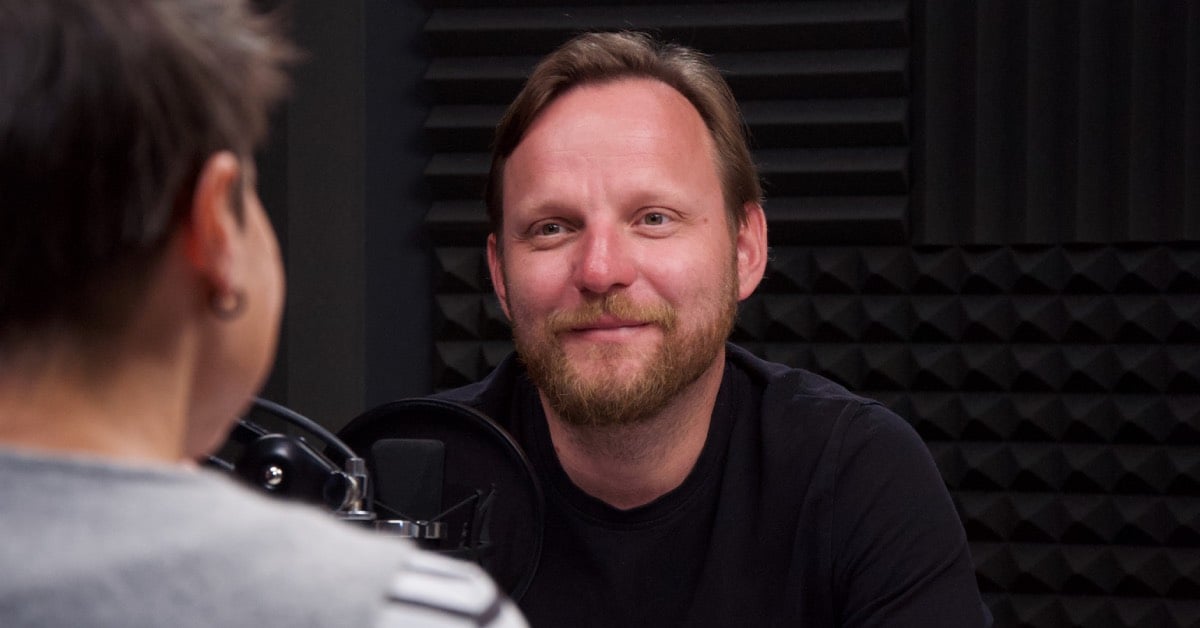
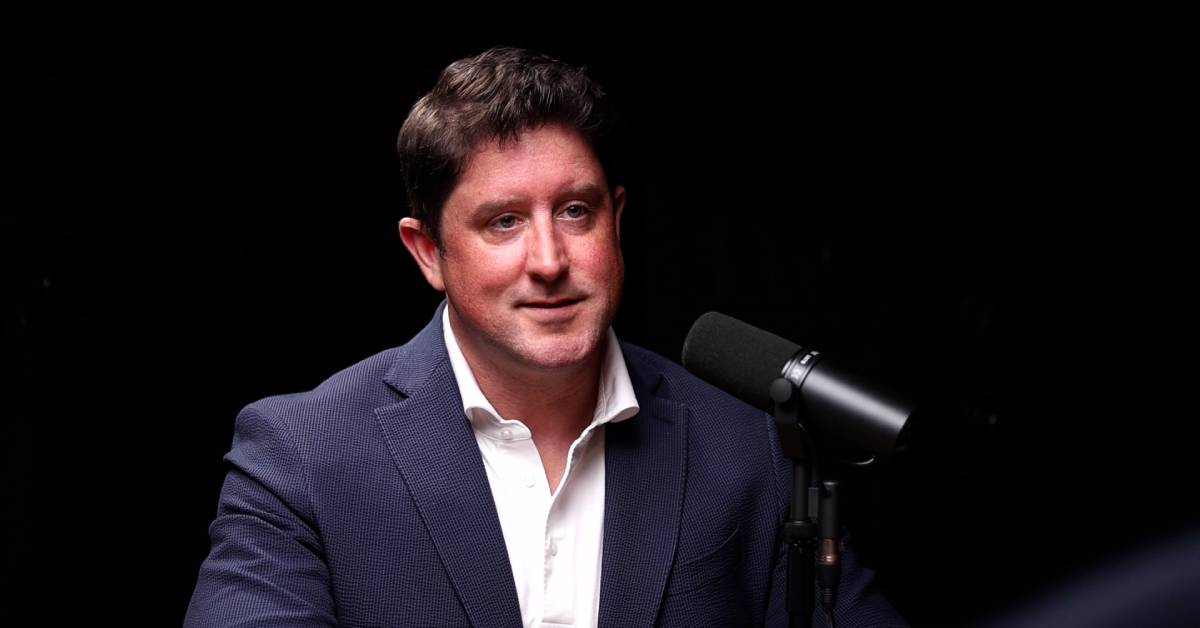
Tamer Farag, Global Fabric Partner Lead at Microsoft, shares how the fastest-growing analytics platform in the world is helping 31,000 customers unify fragmented data estates and unlock AI value. He highlights why you don’t need to move your data to govern it, how mirroring is offered free to accelerate adoption, and what makes partners like Adastra critical to scaling Fabric globally.
- What does it take to connect AI to your data without a massive migration project?
- How is Fabric enabling customers to move from static reports to asking questions directly to their data?
- Which trends, from real-time intelligence to chat with your data, are driving customer demand in 2026?
Watch the full podcast:
Listen to the podcast:
Read the podcast as an interview:
(The interview was shortened and edited using ChatGPT
Mark Kohout: Hello and welcome to this Adastra podcast. My name is Mark Kohout and I lead the North American governance practice for Adastra, a global data, AI, and cloud systems integrator. We’re coming to you today from Atlanta at FabCon and SQLCon 2026. Joining me today is Tamer Farag, Global Fabric Partner Lead at Microsoft. Tamer, a warm welcome to the podcast. We’re delighted to have you here today.
Tamer Farag: Thank you, Mark. I’m very happy to be here.
Mark Kohout: Great to see you. Thanks for taking this time. Let’s start with you. Could you share a little bit about your journey at Microsoft, your current role, and what excites you most about the partner ecosystem around Fabric?
Tamer Farag: I’ve been with Microsoft for just over 25 years. I just finished my 25 years a couple of months ago.
Mark Kohout: Wow.
Tamer Farag: Yeah. I’ve been in multiple roles throughout my journey: technical sales, marketing, roles in Microsoft subsidiaries, and roles at head office. Right now, I lead the Fabric ecosystem team. We work with all our partners to help them be successful, building their capabilities, building their teams, and supporting them through their journey to win deals with us.
Mark Kohout: I imagine you’re dealing with the fact that customers today have data everywhere, in silos, fragmented across departments and legacy systems. How does Fabric help simplify this complexity to enable AI at scale by unifying data?
Tamer Farag: One hundred percent, Mark. Every single customer we’re talking to is looking to adopt AI as a competitive advantage. But what they realize very quickly is that if they just use generative AI models without connecting them to their data, they don’t get a lot of value. The real value from AI comes when it’s connected to data. Data is the fuel for the AI revolution.
As you said, customers have built their data estate over years, and it’s usually very fragmented: data in the cloud, with multiple application vendors, across different hyperscalers. They need to get all this data in one place for AI models to consume and reason over it.
The amazing thing about Fabric is that we don’t ask them to move all their data into Fabric. That would be a huge, complex project. Instead, we leave the data where it is, connect to it, put security and governance over it, and then present it to the generative AI models. That’s a real competitive advantage.
Mark Kohout: Interesting. So you’re putting the security and governance around it the moment it enters the Fabric ecosystem, or in the source systems themselves?
Tamer Farag: Inside Fabric. We leave the data where it is and connect to it. We have shortcuts to connect to the data, or mirroring to take a copy and put it in Fabric. We offer mirroring completely free. Microsoft bears the cost just to have the data in Fabric. Then we build all the AI systems on top of it.
Mark Kohout: So starts can be relatively light. You don’t have to tackle your entire data estate. It also offers a fresh start in terms of governance controls without dealing with all your legacy systems.
Tamer Farag: Exactly. That makes it a lot simpler.
Mark Kohout: For someone who hasn’t seen Fabric live in action, how would you describe its value for those seeking competitive advantage through AI-driven transformation?
Tamer Farag: Fabric is a unified data platform for any organization. It covers everything: data integration and ETL, the data store, the data warehouse, BI reporting, and real-time intelligence. All of this is offered as SaaS. You don’t have to worry about infrastructure or integration between tools. They’re all one fully integrated tool, so all teams work together in one interface.
On top of that, Fabric offers one security model. You secure the data once, and that security flows everywhere, not just inside Fabric, but to any third-party tool connecting from outside, including Office tools like Excel. This prevents data proliferation or unauthorized extraction.
So: full integration, SaaS simplicity, easy to use, strong security and governance, and a complete platform.
Mark Kohout: It sounds transformational, bringing different actors together in one place, from data engineers building pipelines to citizen data consumers and analysts. That must fundamentally change how siloed organizations work.
Tamer Farag: One hundred percent. All personas work in one environment, collaborating together, which really accelerates projects dramatically.
Mark Kohout: You’ve been vocal about the importance of partners in helping Fabric scale. What role do strong partners play in driving adoption and real outcomes for customers?
Tamer Farag: Partners are critical for our success. We have huge momentum. 31,000 customers have adopted Fabric in the last two and a half years. This is the fastest-growing analytics platform in the world ever.
Microsoft is a large organization, but we don’t have enough consultants and salespeople to satisfy all the demand. That’s where we rely on our partners one hundred percent. We want strong partners with the capability to implement successfully. That’s why I lead the Partner Success team. Our job is to prepare partners and make sure they have all the enablement resources and tools they need.
Mark Kohout: Much more than an afterthought. You work with hundreds of partners globally. What qualities make a partner particularly effective in deploying Fabric?
Tamer Farag: The first quality I care about most isn’t even about capability. It’s customer focus. We want partners that put the customer first and think about the ROI the customer is getting.
After that comes capability. We focus on certifications to ensure partners have the right skills and know best practices. Having certified resources gives us confidence they can implement successfully.
Then we want partners with multiple successful deployments so we can trust them. That’s what we do with partners like Adastra, who are Fabric feature partners for us. Engineering stands behind those partners. We’re connected, work closely together, and support them throughout their engagements.
Mark Kohout: With AI and agentic workforces becoming central to enterprise workflows, how do partners help drive adoption and business value? Can you share a recent example?
Tamer Farag: I’d love to use an example from Adastra. I should mention that I live in Montreal, Canada, and I’m very connected to Canadian partners, especially Adastra.
One of their customers is OpenText, a very famous Canadian company. OpenText was using a legacy BI system that wasn’t meeting their needs. They had a lot of data they were trying to bring together, especially after an acquisition where they needed to merge two companies’ data estates. That’s always challenging.
Adastra worked with them to consolidate their data estate, migrate from the legacy BI system to Fabric with Power BI, and implement in record time. They were able to retire the legacy system, move to Fabric, and realize amazing ROI, getting them on the roadmap to adopt AI.
Mark Kohout: More fuel for the business ecosystem. Let’s turn back to Fabric. You talked about the 31,000 customers. That’s incredible acceleration in adoption. From your perspective, what are customers asking for in 2026? What are their top-of-mind use cases?
Tamer Farag: We’re seeing a few really interesting trends.
First, real-time intelligence. Customers are thinking about BI and analytics not just on historical data, but in real time, leveraging it to optimize operations. Originally, real-time intelligence was mainly for manufacturing and IoT scenarios, but now we see demand across banking, healthcare, financial services, and every industry.
Second, AI and chat with your data. Instead of static reports and graphs, customers want to ask questions to their data. Everyone’s using natural language to interact with data now.
Third, migration from legacy systems to modern, unified data platforms. Many customers who were hesitant to move to the cloud are now accelerating because AI requires a solid data estate. So migration has become a major scenario.
Mark Kohout: It strikes me that real-time intelligence influencing operations more broadly than ever before is a fundamental shift, a catalyst for business.
Tamer Farag: One hundred percent.
Mark Kohout: We’re at the fifth FabCon. How has Fabric matured and evolved over the years? Have you seen progression in customer demand as well?
Tamer Farag: We’ve been working very hard. With SaaS products like Fabric, we release every single week. That’s how fast we’re moving. Every month, we combine those updates and share them globally.
We’ve invested heavily in building Fabric’s capabilities over the past two and a half years, and we’ve reached a maturity level that satisfies the needs of every customer.
Today, I’m really excited because we just announced we’re adding planning to Fabric. Historically, analytics tools reasoned on historical data. With real-time intelligence, we handle what’s happening now. And with planning, we address what will happen in the future. This will open doors for many customers to accelerate their transformation.
Mark Kohout: For someone listening today who wants to leverage Microsoft Fabric and the partner ecosystem to drive real impact, what advice would you give as a starting point?
Tamer Farag: First, go explore the product yourself. You can get a free trial right away. But also talk to a partner. Partners can do an assessment and envisioning session for you, understand your environment, and tell you how they can help.
This isn’t just an IT discussion. It’s a business transformation discussion. Share your vision, roadmap, and business goals with the partners. Let them assess your environment and guide you on which tools will help deliver on your vision. That’s the first step.
Mark Kohout: So your partners are a resource to leverage.
Tamer Farag: One hundred percent.
Mark Kohout: Tamer, thank you very much for taking this time. I know we had 8,000 people at FabCon today and keynotes were packed. It’s been a long day. I really appreciate you sitting down with us.
My key takeaway is how Fabric gives you a chance for a new start: a controlled environment, starting small, relatively easier than one might anticipate from past system development experiences.
Tamer Farag: Thank you, Mark, for having me here. It was really a pleasure.
Mark Kohout: And to our audience, if you’ve enjoyed today’s discussion, thank you for joining us. Please be sure to like and subscribe to this podcast series for more insights on data, analytics, AI, and partner-led innovation. Until next time, thank you for being with us. So long for now from FabCon and SQLCon 2026 in Atlanta.