Insights
Deep Dive into Data Products: A Comprehensive Guide
January 11, 2024
In today’s digital age, data acts as the catalyst propelling business innovation and growth. It’s not merely about accumulating vast amounts of data but leveraging it to forge actionable insights that pave the path for informed decisions and groundbreaking innovation. This is where data products, underpinned by data mesh principles, become instrumental, transitioning the abundance of raw information into meaningful action.
Our comprehensive guide dives into the essence, development, and profound impact of data products, enhanced by a data mesh framework that promotes decentralized data ownership, domain-oriented data, and treating data as a product.
Understanding Data Products, Domains, and Catalogs

What are Data Products and Services?
Data products are the result of the practice of applying product management practices to data. This means grouping data from various sources into a reusable, almost ready-to-use package that is curated, trusted and compliant, to meet the needs of different stakeholders. Consumers can shop for which pieces they need and begin leveraging the data with just a small amount of configuration required.
A data product normally includes a name, a list of components, information about the data’s source and sometimes lineage to provide a full picture of important organizational topics like customers, employees or specific products.
What are Data Domains?
Domains represent the organizational structure or business areas that take responsibility for specific sets of data products. The relationship between data products and domains is central to the data mesh philosophy, where the goal is to enable decentralized data ownership and governance while ensuring that data is treated as a valuable and well-managed asset across the organization.
What is a Data Catalog or Marketplace?
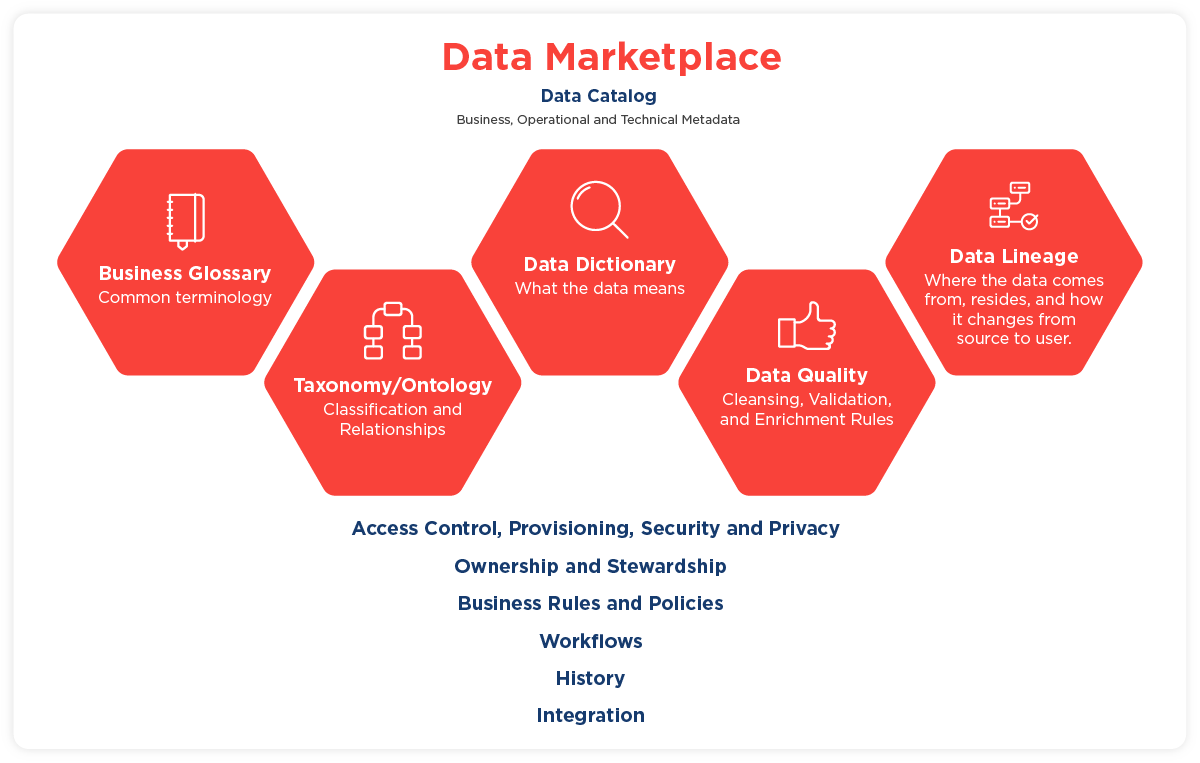
A key aspect of data products is having a data catalog, or data marketplace: a detailed repository of all data products within an organization. Having a centralized data catalog allows different data citizens within organizations to easily discover and locate information for analytics or other use cases, without having to dig for it. Data definitions tell you what is supposed to be in a data product, while data profiling tells you what is actually there. If these two vary, there may be an issue with your organization’s data quality. A data catalog includes processes to continually collect, cleanse and enrich metadata to keep accurate records that are easier to use.
This approach to data product ownership and lifecycle management ensures data quality and facilitates a self-serve data infrastructure.
Examples of Data Products
Data products permeate our daily lives in various forms. Some examples of data products are:
- Traffic navigation apps: Tools like Google Maps rely on real-time traffic data to suggest the fastest routes, showcasing the power of data visualization in a data product.
- Product recommendation systems: E-commerce platforms utilize user behavior data to recommend products that align with past purchases and browsing history, personalizing the shopping experience.
- Financial fraud detection systems: Banks leverage complex data analysis models (data products) to identify suspicious transactions and prevent financial losses.
Types of Data Products
There’s no one-size-fits-all solution. Data products come in various forms, each serving a specific purpose. Below are some examples of types of data products:
- Dashboards as Data Products: These interactive dashboards go beyond basic data display. They offer filtering options, drill-down capabilities, and real-time updates, allowing users to explore trends, identify patterns, and gain deeper insights from the data.
- Predictive Analytics Tools: These data products leverage sophisticated algorithms to forecast future trends and potential outcomes. Imagine a sales forecasting tool that analyzes historical sales data and market trends to predict future demand, enabling businesses to optimize inventory and marketing strategies.
- Decision-Support Systems (DSS): These data products provide users with data-driven insights and recommendations to support complex decision-making processes. For instance, a hospital’s patient risk assessment tool might analyze medical history and real-time patient data to suggest treatment options, aiding healthcare professionals in making informed decisions.
The Role of APIs
APIs, or Application Programming Interfaces, can act as a delivery method for data products. APIs essentially expose specific functionalities of a data product to other applications, allowing for seamless integration. Imagine a weather data API that provides real-time weather information to developers, who can then integrate this data into their weather forecasting apps.
Beyond Raw Data
Raw data is the foundation, but it’s the processing, analysis, and presentation that transform it into a valuable data product. Think of raw ingredients in a kitchen. While essential, it’s the cooking process that transforms them into a delicious meal. Similarly, data products involve various steps like data cleaning, transformation, and analysis to create insights that are consumable and actionable for users.
Why Build Data Products?
Within the first 6-12 months of implementing their data marketplace, organizations saw an average increase of:
- 60% operational efficiency
- 42% data quality and trust
- 22% organizational growth
There are many organizational benefits to using data products, including:
Enabling Data-Driven Decision Making
By treating data as products, organizations prioritize data accessibility and usability. Just as product developers focus on creating user-friendly experiences, organizations can develop data products that are intuitive and easily accessible to decision-makers. This empowers employees at all levels to make quick data-driven decisions, leveraging insights and analytics to drive operational efficiency, identify growth opportunities, and mitigate risks.
Decision-makers don’t need to waste time searching for data, processing it into the right format, or building data pipelines. Data products are key enablers of organizational agility and informed decision-making.
Enhancing Data Quality and Governance
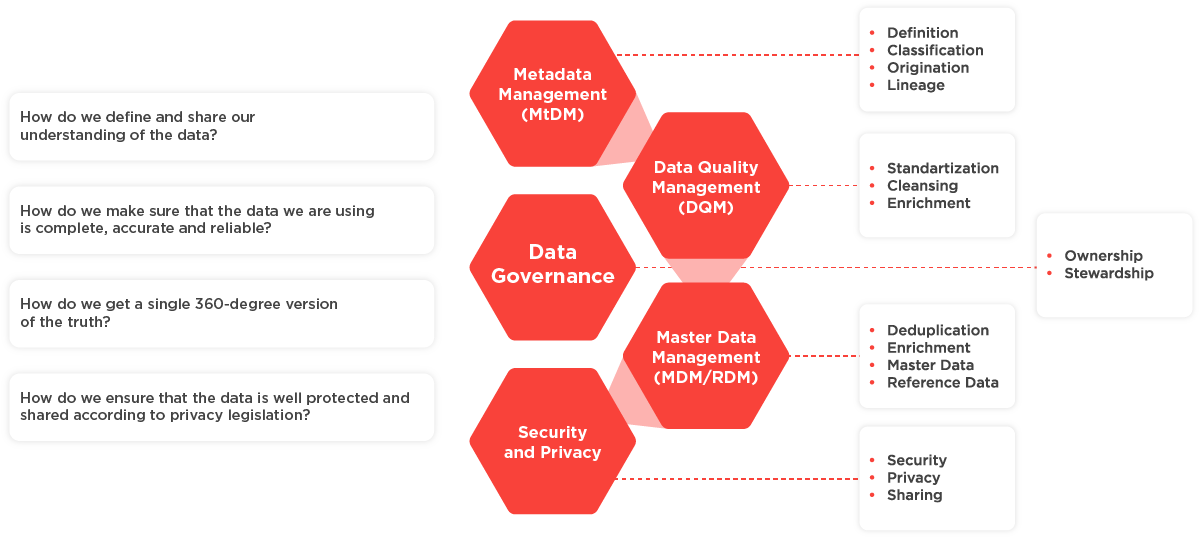
Treating data as products involves establishing a robust framework for data quality and governance. Just as organizations invest time and effort in ensuring the quality of their products, they should apply the same rigor to their data assets. This includes defining data standards, implementing data quality controls, and establishing data governance processes. By treating data as products, organizations prioritize accuracy, reliability, and completeness, ensuring that their data is of high quality and fit for purpose.
Promoting a Data-Centric Culture
When organizations treat data as products, they foster a data-centric culture. Employees are encouraged to view data as a strategic asset and understand its importance in achieving organizational objectives. This cultural shift promotes data literacy, encourages data-driven thinking, and increases awareness of the impact of data on business outcomes. A data-centric culture ensures that data is valued, respected, and actively utilized across all levels of the organization.
Driving Data Monetization and Value Creation
By packaging and offering data products, organizations can also create new revenue streams and tap into emerging markets.
For example, some organizations choose to offer services to their clients in which the client provides consent to access their data, and the organization then packages this data with added value, such as data science models or insights.
Launching Your Data Product: Data Product Strategy
How to Make a Data Product
Deciding which data products to choose or create in a data mesh for different domains involves a combination of understanding business needs, collaborating with domain experts, and considering the overall architecture and goals of the data mesh implementation. Here are steps and considerations to help make these decisions:
- Understand Business Needs:
- Start by understanding the business goals and requirements of each domain. What are the key processes, activities, and decisions within each domain?
- Identify critical data elements that are essential for supporting the domain’s business functions and achieving its objectives.
- Collaborate with Domain Experts:
- Work closely with domain experts and stakeholders to gain insights into the specific data requirements of each domain. Domain experts understand the nuances of business processes and can provide valuable input on the types of data that are most critical for their operations.
- Identify Key Data Entities:
- Identify the key entities or objects that are central to the business processes within each domain. These entities may include customers, products, transactions, or any other relevant business concepts.
- Consider Inter-Domain Relationships:
- Understand how data flows and interacts across different domains. Consider the inter-domain relationships and dependencies to ensure that the chosen data products align with the organization’s overall data needs.
- Prioritize Data Products:
- Prioritize the creation of data products based on the criticality and business impact of the associated data. Focus on high-value data that has a significant impact on decision-making and operational processes.
- Evaluate Reusability:
- Assess the potential for reusing data products across multiple domains. Identify opportunities where standardized or common data products can be shared or leveraged to promote consistency and efficiency.
- Consider Evolution and Change:
- Recognize that the data landscape is dynamic and business requirements may evolve over time. Design data products with flexibility and scalability in mind, allowing for future changes and adaptations.
- Ensure Data Product Autonomy:
- Each data product should be self-contained and have a clear boundary. Ensure that the domain team has autonomy over the data product, including its development, maintenance, and evolution.
- Adopt Domain-Driven Design Principles:
- Apply principles from Domain-Driven Design (DDD) to model and define the boundaries of each domain. Use DDD concepts such as bounded contexts and aggregates to create clear and well-defined data products.
- Establish Governance and Standards:
- Establish governance mechanisms and standards to ensure consistency and quality across data products. Define data product interfaces, quality metrics, and other standards that promote interoperability.
- Design the User Interface: Develop an intuitive and user-friendly interface that facilitates data exploration and visualization.
- Development and Deployment: Choose the appropriate technology stack and deploy your data product securely and efficiently.
How Do You Name a Data Product?
A clear and concise name is crucial. It should reflect the product’s purpose and resonate with the target audience. For example, a data product that predicts customer churn might be called “Customer Retention Predictor” or “Churn Buster.”
Embracing Data Mesh for Next-Level Data Management
The adoption of data mesh reflects a paradigm shift in data management, addressing challenges of scalability and collaboration through decentralized data ownership and a domain-oriented approach. By conceptualizing data as a product, organizations facilitate a more flexible, collaborative, and efficient data environment, driving data stewardship and data governance across the board.
Data mesh principles such as federated computational governance and self-serve data infrastructure empower teams, offering autonomy while maintaining a cohesive strategy across domains. This ensures that data quality and security are upheld, leveraging metadata management and data lineage to provide transparency and trust in data products.
Watch a 30-minute interview with the Chief Data Officer of Raiffeisen Bank
Discover Raiffeisen Bank’s approach to building data products and implementing a data mesh.
Overcoming Challenges with Data Product Development
We should remember that the goal of a data mesh is to enable decentralized data ownership and governance while fostering collaboration and scalability. The decisions around data products should align with the principles of autonomy, product thinking, and domain-oriented design within the data mesh framework. Regular communication and collaboration between data and domain teams are crucial for making informed decisions and ensuring that data products effectively meet the needs of the organization. Creating data products within a data mesh framework also presents various challenges. Here are some common challenges associated with creating data products in a data mesh:
- Cultural shift: Shifting the organizational culture to embrace the principles of data mesh, including decentralized data ownership and a product-oriented mindset, can be challenging. Teams may be accustomed to a more centralized approach to data management.
- Data quality and consistency: Ensuring consistent data quality across different domains can be challenging. Without a centralized team overseeing data governance, maintaining standards, and enforcing quality can become more complex.
- Data discovery and accessibility: Discovering and accessing relevant data products across different domains can be challenging. Ensuring that data products are well-documented, easily discoverable, and accessible to other teams is crucial.
- Inter-domain collaboration: Promoting collaboration and communication between different domain teams can be a challenge, especially when dependencies exist between data products from different domains. Effective collaboration mechanisms need to be established.
- Technical heterogeneity: Different domains may use different technologies and tools for data storage, processing, and analysis. Managing technical heterogeneity while ensuring interoperability and data compatibility can be a significant challenge.
- Data security and privacy: Decentralizing data ownership raises concerns about data security and privacy. Ensuring that sensitive data is appropriately protected, and that access controls are well-defined, becomes crucial.
- Infrastructure and tooling: Providing the necessary infrastructure and tooling to support domain teams in building and maintaining their data products can be challenging. Ensuring that teams have the right resources and capabilities is essential.
- Change management: Managing the transition from a centralized data model to a data mesh requires effective change management. Ensuring that teams understand and buy into the new, innovative approach is critical for successful implementation.
- Metrics and monitoring: Establishing standardized metrics for evaluating the performance and quality of data products and implementing effective monitoring across decentralized systems can be challenging.
- Skill sets and expertise: Ensuring that domain teams have the necessary skills and expertise to handle the end-to-end ownership of data products may require training and upskilling. This is particularly relevant for teams transitioning from more specialized roles.
- Cost management: Understanding and managing the costs associated with decentralized data ownership, including infrastructure costs, tooling expenses, and potential redundancies, is crucial for optimizing resource utilization.
- Regulatory compliance: Ensuring that data products and practices adhere to regulatory compliance standards becomes more complex in a decentralized model. Each domain team must be aware of and compliant with relevant regulations.
Overcoming these challenges often involves a combination of organizational commitment, effective communication, robust tooling, and ongoing collaboration between domain teams. Implementing a data mesh is a journey that requires continuous adaptation and improvement as the organization evolves in its data management practices.
Unlocking the Full Potential of Data Products
Wrapping up our exploration into the world of data products and the data mesh concept, we find ourselves at a crucial juncture. The journey isn’t just about collecting data; it’s about leveraging it as a pivotal force that can drive smarter business decisions, spark innovation, and secure a competitive advantage.
Throughout our guide, we’ve unpacked how transforming data into purposeful products can remarkably influence a business’s operations. From enhancing customer insight to streamlining processes, the tangible benefits are clear. The data mesh approach, advocating for a decentralized yet cohesive management of data, enables every part of an organization to truly harness and maximize the value of its data assets.
By treating data as a strategic asset—accessible, manageable, and valuable—organizations stand on the brink of significant gains. This approach not only enhances accessibility and decision-making but also positions data as a core contributor to business value.
The path forward is clear: embracing this shift towards a more value-driven and integrated approach to data management presents a wealth of opportunities. It’s a call to action for organizations to adapt, overcome challenges, and explore the vast potential of well-managed data products. The future of data-driven innovation and operational efficiency awaits those ready to journey through this evolving paradigm. Let’s move forward together, charting the course towards a data-empowered future.