Podcast
“Where Not to Use AI Matters More Than Where to Use It,” Says Brad Freels, Microsoft
May 19, 2026
Brad Freels, Azure Data and AI Specialist at Microsoft, shares how meeting customers where they are, building AI Centers of Excellence, and diving in without waiting for “perfect data” are reshaping how enterprises unlock value from cloud, data, and AI. He explains why the biggest barrier to AI isn’t technology but fear and paralysis, how partners compress time to value by bridging Microsoft best practices to each customer’s unique environment, and why executive-sponsored Centers of Excellence lower the temperature on change management while creating guardrails that prevent shadow AI and governance nightmares. He also shows where to start now, such as standing up a 60-day Fabric trial, rebuilding an existing report, and letting AI itself help curate the messy data you already have, because your competitors aren’t waiting and neither should you.
- What does it really take to move from fear of AI to a culture that leans into it?
- How can you start small with the data and tools you already have and still build toward enterprise-wide transformation?
- Which guardrails, sponsorship, and partner relationships let you accelerate AI adoption without losing control?
Watch the interview:
Read the podcast as an interview:
(The interview was shortened and edited using ChatGPT)
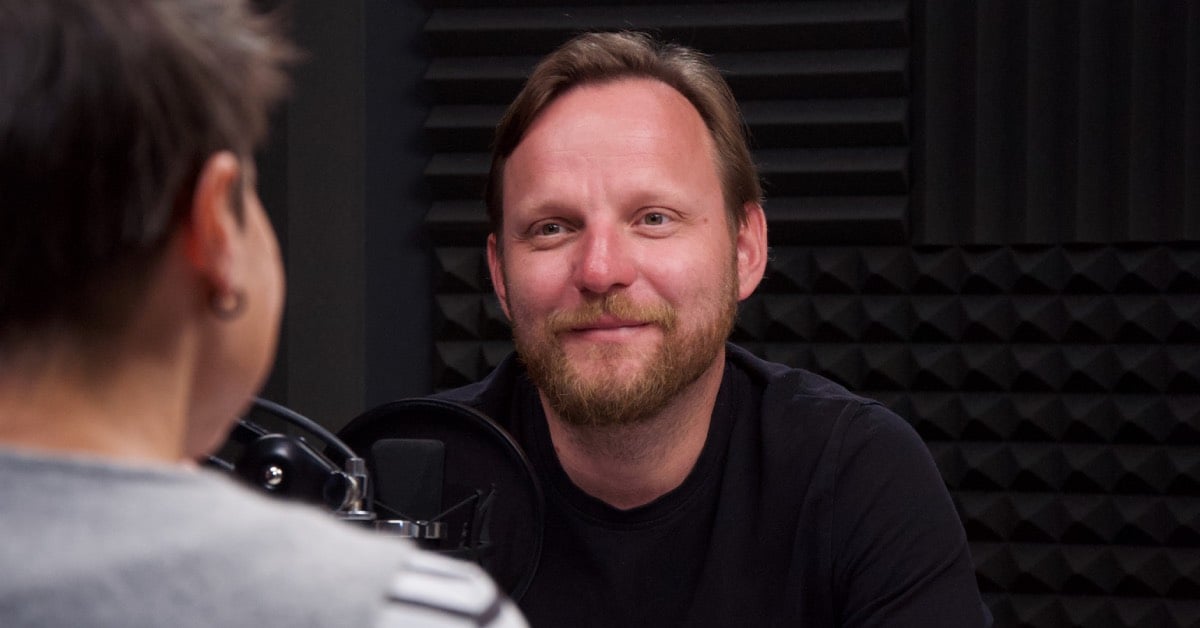
Mark Kohout: Hello and welcome to this Adastra podcast. My name is Mark Kohout, and I lead the North American Governance Practice at Adastra, a global data, AI, and cloud systems integrator. We’re coming to you today from Atlanta at the occasion of FabCon 2026.
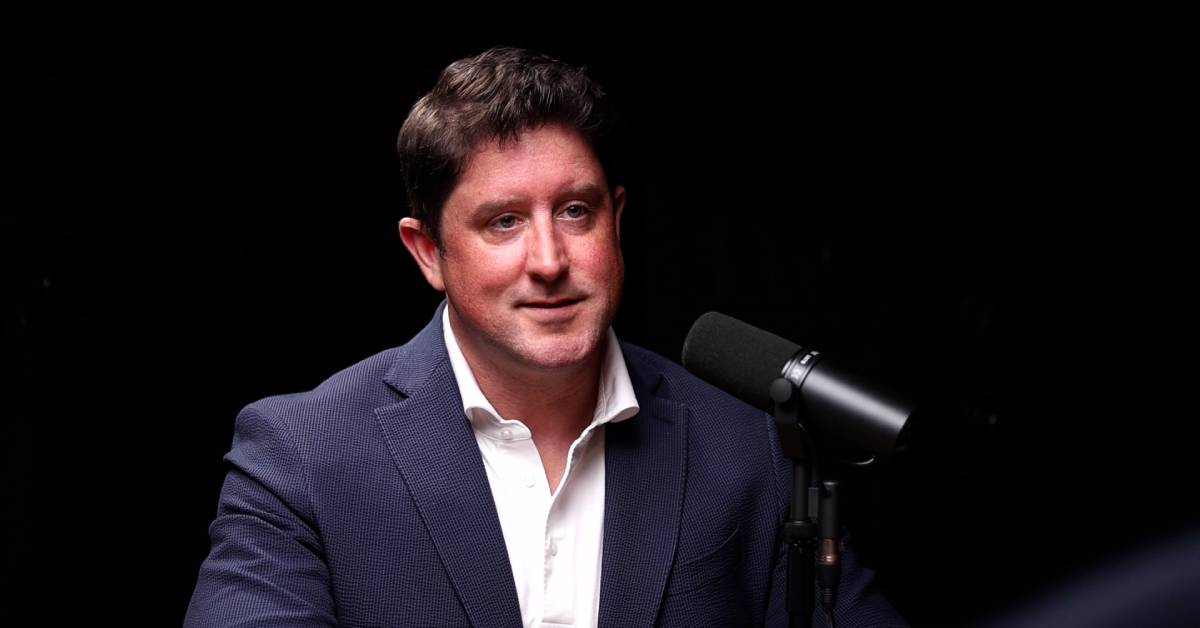
Joining me today is Brad Freels, Azure Data and AI Specialist at Microsoft. In his role, Brad Freels works closely with executive teams to help organizations align Microsoft’s cloud, data, and AI capabilities with their strategic goals. He acts as a strategic advisor, orchestrating complex engagements, facilitating workshops to drive client alignment and readiness, and ensures customers have the right technical, commercial, and operational support to succeed.
Brad Freels, welcome to our podcast. You and I have worked together a few times on partner and client projects. It’s great that events like FabCon give us a chance to meet in person. Thank you for joining us.
Brad Freels: Looking forward to it.
Mark Kohout: Let’s start with the man behind the role. What’s your background, and what was your path to your current role at Microsoft?
Brad Freels: I went to the University of Texas. Hook ’em horns to any Longhorn fans out there! I started as a business major, but there’s a street called Sixth Street. Think Bourbon Street for college kids. Let’s just say I didn’t do so well in business.
I switched to become a math major with plans to be a math teacher and basketball coach. My mom was a high school teacher for over 20 years. When I told her my plan, she said, “I’m so excited for you. You’re going to be great at it.” Then she uttered one sentence that changed my life: “But with your tastes, Brad, you won’t survive on a teacher salary.”
Mark Kohout: Funny how that works.
Brad Freels: So I stayed a math major but shifted to programming, something I’d done since middle school. I joined Microsoft in 2001 as a technical resource helping sellers educate customers about technology. I was there from 2001 to 2012. Then I moved into sales.
People always ask why a technical guy would go into sales. I was covering SharePoint and search when SharePoint really exploded. We blew out our number, had a great year. As a technical seller, I bought a new TV and hung it on my wall. The next day, the sales guy I supported picked me up in a new car. TV or car? I chose car.
I spent about ten years in startups, including some AI-based companies, then rejoined Microsoft about four and a half years ago as a Data and AI Specialist.
Mark Kohout: With that background, the analytical thinking, the music, the basketball, let’s talk about your approach. Specifically, how do you connect executive teams to Microsoft’s cloud and AI capabilities and tie them to broader business strategy?
Brad Freels: The number one question I get is, “How do I get value out of AI?” The biggest success comes from meeting customers where they’re at. You have customers at varying degrees of this AI journey. Some are fearful, others are going 90 miles an hour.
My first instinct is to understand more about them. Why are they asking about AI? What information do they have? Are they learning from peers, or is the push coming from inside? Once I understand that context, I know how to guide them.
If they’re fearful and I start talking about deploying 10,000 agents in two weeks, it won’t connect. You have to walk them through step by step, give them the education they need for the next step while helping paint the long-term vision.
Mark Kohout: Almost like being a business consultant, understanding operations, strategies, goals, and the idiosyncrasies of every company.
Brad Freels: Absolutely. It’s almost as important to tell them where not to use AI. Some people see AI as a hammer and everything as a nail. Helping them understand where not to apply it can be more important than where to apply it.
Mark Kohout: So it’s a form of leadership, sketching out what good looks like, visioning the future, then deciding whether to start with the left foot or right foot on this thousand-step journey.
One theme that keeps coming up when I speak to senior Microsoft leaders is the role of partners in your ecosystem. How do partners amplify the value of Azure services for customers?
Brad Freels: We couldn’t survive without partners. We can’t scale to meet customer demands alone.
When I educate customers with my technical people, we do it from a best-practice perspective, how the product group says to use the service. What I can’t do eloquently is translate that best practice into their specific environment. I don’t have enough time with each customer.
That’s where partners come in. Rather than customers stumbling through implementation, partners know our best practices inside and out. That’s all you do. Then you learn the customer’s environment and make that translation. The result is dramatically compressed time-to-value.
If customers try it alone, they hit roadblock after roadblock, then wait days to meet with us. Partners help compress time-to-value and ensure correct implementation with proper security, governance, and retention policies in place.
Mark Kohout: So partners bridge Microsoft’s best practices to the client’s world by spending more time with them and building deeper engagements. How does the partner role evolve as Azure Data and AI adoption grows?
Brad Freels: Walking around the conference, the common theme is everything is changing so fast. Many IT people I work with are just trying to keep the lights on, let alone keep up with the latest model released last week. It’s whiplash.
That’s what partners specialize in. Going forward, the partner role will be even more important because customers won’t be able to keep up with all these changes. When partners bring that expertise, customers gain confidence they’re using the right technology for the right problem.
Mark Kohout: Let’s start with what’s often the beginning, data readiness. For companies thinking about leveraging Azure to drive transformation and competitive insights, what’s your top piece of advice?
Brad Freels: This is a very common discussion. What I typically hear is, “My data isn’t ready,” or “I need to clean my data first.” That just delays everything.
My number one message: don’t wait. Dive in now. Do it responsibly, not carelessly. Start understanding what you can do with the data you have, in the shape it’s in right now.
Your competitors are doing exactly that. If they get advanced capabilities before you, you’re behind the curve. Fail fast, figure it out. When you do fail, make sure it doesn’t release all your data to the world. There are ways to get up and running much quicker than most people think.
Mark Kohout: One theme I’ve been hearing at FabCon is about the fresh start that a platform like Fabric offers. It brings together all the functionalities needed to control, work with, and prepare data. Even without necessary controls in legacy systems, it’s an opportunity to move forward without dealing with all your technical debt.
Brad Freels: Absolutely. I’d take it a step further. Customers already have reporting somewhere, SQL, Azure, or some other format. When starting with Fabric, there’s a 60-day free trial. Stand it up. Implement one report, connect to a data source or two, walk through the transformation, build a report, deploy it. Keep it simple and time-boxed.
Then compare it to what you have now. It’ll take longer because it’s new technology, but think about what happens next. When you need another data source or another report, it won’t take as long. You can see the value incrementally. Don’t try to do everything at once.
Mark Kohout: And maybe one of those transformational moments is simply, “Hey, I can do this.”
Brad Freels: Exactly. Build confidence that you can do it securely, fast, and get value out of it.
Mark Kohout: Let’s turn to the hot topic, AI, LLMs, and agentic AI. With information overload and rapid evolution, how should organizations get started deploying AI to transform their businesses?
Brad Freels: The customers who’ve been most successful do one thing before they even start: they implement an AI Center of Excellence.
First, if it’s done right, it comes from the executive level down. That sponsorship gives direction to the company. There’s a lot of fear about AI. The further down you go in an organization, the more fear there is. People worry it’ll take their jobs or make them look stupid.
With top-level approval, you start building a culture of leaning into AI rather than away from it. People start asking, “How can AI help me?” instead of fearing change.
Second, it helps with technology choice. If you’re a Microsoft shop, that predefines some technologies. But without a Center of Excellence, you get different groups doing shadow AI. One using this LLM, another using that one, someone else doing something in the cloud. Then governance becomes a nightmare.
Third, when AI projects kick off, you have pre-defined evaluation processes. Is this an AI project? Do we need something simple like a copilot, or something complex like AI Foundry? Is it LLM-based or regression-based? You have a workflow for implementation.
The Center of Excellence puts guardrails in place. Then everyone starts sharing knowledge, and the value you get from AI goes through the roof.
Mark Kohout: As a governance person, I think about “just enough governance,” frameworks that enable progress while being right-sized for each organization. One great benefit of Centers of Excellence is they bring down the temperature. In uncertain environments where change management is a big issue, having a go-to spot, a fount of knowledge and practices, helps people get out of paralysis and moving.
Circling back to data: do customers need to invest a great deal of time curating their entire data estate before moving to AI solutions?
Brad Freels: No. Don’t wait. This stuff is coming so fast, and the people who adopt it will get tremendous value. There are ways to adopt responsibly.
AI can help you figure out what you have, what’s good, what’s not. It can help curate data with you, pull it out, look at it, identify what’s missing, go back and get it. You’ll reach the point where you have the data you need for the questions you’re trying to answer.
Mark Kohout: That’s a strong insight. Don’t wait, the competition is moving. Work with what you have and build from there. Any examples of this done well?
Brad Freels: Yes. Heritage Grocery Group. We brought Adastra in to help. They’re a Hispanic grocery chain whose growth strategy is acquisition. As you know, with any acquisition, data is a mess. Sometimes it never gets merged. I know a customer with 37 ERP systems. How do you even manage that?
Since their strategy was acquisition-based, they wanted to onboard data and integrate it into their reporting quickly. With the help of some of your AI accelerators, that’s exactly what they did. They used AI to get data ready, pull only what they needed, and centralize it for reporting after acquisition.
It’s absolutely real and doable. You just need policies and procedures in place, guardrails to do it responsibly.
Mark Kohout: So it’s not just theory. It actually works.
Brad Freels: People are doing it every day.
Mark Kohout: We’re about out of time. Looking back on your career, what key experiences shaped how you approach customer engagements today?
Brad Freels: There isn’t one single experience, but there’s a skill I’d encourage everyone to have, especially in this era of massive change and rapid innovation: curiosity.
Try to understand where people are, what their motivations are, how they need help. Everybody’s got a story. If you listen hard enough, there’s always something to learn.
I never walk into a customer assuming I know what they’re doing. I ask questions, see where they’re at, then work with them to provide the education they need.
Mark Kohout: Brad Freels, staying curious. Great lessons for business and life. Thank you for this insightful conversation.
My key takeaways: get going with where you are today, don’t wait years to roadmap it all. Learn by doing. Think about Centers of Excellence as an organizational grounding mechanism. Build concentric circles in a controlled fashion.
It’s been a pleasure, Brad Freels.
Brad Freels: Thanks, Mark Kohout.
Mark Kohout: To our audience: if you enjoyed today’s discussion, be sure to like and subscribe for more insights on data and AI business transformation. Until next time, thank you for listening, and so long from Atlanta, FabCon 2026.