Podcast
AI Will Become an Integral Part of Our Lives, Depending on How We Choose to Embrace It, Says Ondřej Vaněk
July 13, 2023
“ChatGPT is an accessible technology. For $20 a month, I get quite a good tool that users can get accustomed to. Larger investments in integrating it into business processes then become more manageable and can be done incrementally. Currently, in the Czech Republic, we see a significant increase in interest in AI compared to previous years,” says Ondřej Vaněk, CEO of Blindspot Solutions.
The Czech technology company Blindspot Solutions, a member of Adastra Group, recently made headlines in February when it accurately predicted Petr Pavel’s presidential victory using its artificial intelligence models. Blindspot Solutions excels in the corporate sphere, streamlining processes for industrial firms, banks, and insurance companies. They are now exploring the phenomenon of generative AI, highlighted last fall by tools like ChatGPT and Midjourney, which could benefit e-commerce, especially in the long-discussed yet underachieved area of personalization.
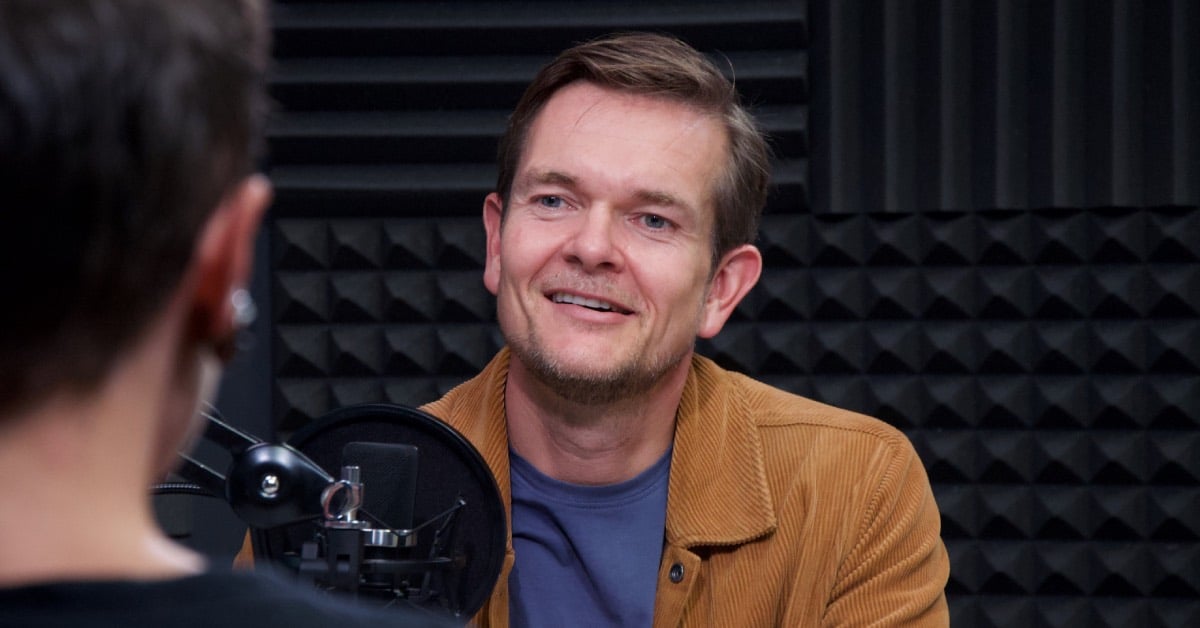
“E-shops are still far from it. When I visit Alza, it greets me by name, but I still don’t feel like it’s my personalized Alza,” Ondřej Vaněk, CEO of Blindspot Solutions, mentioned in the Forbes Business podcast. He believes AI will eventually permeate our entire lives, and it’s up to individuals to decide how they will let it enhance or detract from their existence.
“Everyone will have access to what they decide for themselves. It will be about how each person designs their life. Of course, many will become victims. But many will use AI for tremendous prosperity,” Vaněk asserts.
- Are Czech companies actively embracing ChatGPT, or do they remain cautious?
- Why is there a sudden surge in interest in adopting AI technologies that have been around for a decade?
- How can generative AI enhance the work of programmers, facilitate education, or improve services in sectors like banking or insurance?
- And should we be concerned about AI taking our jobs?
Listen to the podcast (CZ)
Read the podcast as an interview
Jan Strouhal: Welcome to another July Forbes Business podcast. I’m Honza Strouhal, joined today by Ondřej Vaněk, CEO of the AI-focused technology company Blindspot Solutions, which helps businesses improve processes across the board. Today’s discussion promises to be very intriguing. Hello, Ondřej.
Ondřej Vaněk: Hello and thank you for the invitation.
Jan Strouhal: Thanks for coming to our studio. I briefly outlined what Blindspot Solutions does, but can you describe it in your own words?
Ondřej Vaněk: Certainly. I think you captured it well. We help both large and small businesses, the industry in general, to adopt artificial intelligence primarily through software solutions. We aim to operate across various sectors because we see the potential everywhere.
Jan Strouhal: The scope is huge, across all businesses and sectors like banking…
Ondřej Vaněk: We strive for that. Some adopt it with great enthusiasm and investment, while others are more modest. But as we touch on the latest technologies emerging in AI, there are very few resistors left.
Jan Strouhal: When we say artificial intelligence, most think of ChatGPT and Midjourney, tools we currently enjoy playing with. But they’re not just for fun; they also aid in business. Do you also focus on generative AI?
Ondřej Vaněk: We do. I wouldn’t say we just jumped on the bandwagon. We’ve been tracking this for a long time and have used previous versions of GPT and other natural language processing predecessors. Having been in AI implementation for over 10 years and previously in academia, we’ve encountered various “hype” technologies, considered the true AI or the direction it would take. Over these 15 to 20 years, we’ve absorbed several directions and don’t want to limit ourselves to one technology. Even now, when generative AI seems to address a wide range of use cases, it’s important not to forget the traditional technologies under the AI umbrella, which can be applied to various business problems or opportunities. We’re open to the entire spectrum of methods, not just focusing on one piece of technology.
Jan Strouhal: Observing this for about 15 years, do you see generative AI as a game changer? Many companies view it that way, seeing it as something new, a major shift.
Ondřej Vaněk: For us, the game changer is AI in general. Technologies like ChatGPT and transformers are incredibly powerful. The latest versions, GPT 3.5 or 4, commercially available now, have surprised me with their output quality from often vague inputs and are very usable, productive, and accurate. Some in our industry might have predicted this development, and many have been pleasantly surprised by how advanced and applicable the technology is in numerous sophisticated use cases. So, to answer the original question, we place great importance on it and see that this piece of the technological puzzle will help many companies that didn’t quite know how to handle AI.
Jan Strouhal: Perhaps for you, not a game changer, but maybe a catalyst would be a better term?
Ondřej Vaněk: That’s a very good word. People have become much more receptive to AI. Often, it was set aside, viewed as advanced statistics or something nebulous, not needed here. Now, interestingly, many companies approach us, flirting with the idea, observing, but with the emergence of ChatGPT, they really want to get involved. The challenges they envision being solved by this technology are often those that could have been addressed by technologies available 5 or 10 years ago. Thanks to awareness of GPT, even traditional methods that we’ve been successfully using are getting their chance. It’s great to have good references and solutions that have been running in production for 6 to 8 years, making further deployments a pleasure.
Jan Strouhal: So, how are Czech companies approaching these tools? Is there an increased appetite because it’s said that AI might replace some jobs and bring savings? Do you see an increased demand for these tools this year?
Ondřej Vaněk: I’ve often said in previous podcasts or interviews that Czechs are conservative, cautious with their investments, often fearful of replacements, etc. I think that sentiment still persists somewhat. However, with the discovery of GPT, which reached our parents or children, curiosity has won out, and the tool is quite accessible. You don’t need a multimillion-dollar investment; for $20 a month, you get a pretty good tool. Of course, integrating it into business processes for an enterprise is a different story. But people can immediately grasp the potential and start using it. Czechs like to get hands-on before making investments, which then become easier and can be done incrementally. So, we see a significant rise in interest in the Czech Republic, much higher than in previous years. And about the fear of being replaced – many people tell me: I look forward to being replaced, or rather my automatable work, so I can focus on something productive. Unemployment statistics show a labor shortage with more work to come, especially as GPT is implemented. I’m not worried personally, and surprisingly, only a small portion of people fear unemployment due to AI.
Jan Strouhal: That’s interesting because the general sentiment is fear of job loss. But you’re saying that GPT and similar tools will more likely cooperate with us or take over routine tasks, allowing us to focus on something else.
Ondřej Vaněk: That’s how I see it. I envision two outcomes from the deployment. One is that AI will take over routine tasks. For example, when I need to compose an email, it polishes my words, helping me respond politely when I’m irritated. But people also sift through endless Excel sheets and import various things into SAP or copy from ERP systems. We say: let’s eliminate this work. AI isn’t always the solution, but sensible digitization, integration, and automation of these systems are definitely needed. When people have more time, they do their work better. Their outputs are more thoughtful, nuanced, and personalized.
Jan Strouhal: Do you have any statistics or hard data on this?
Ondřej Vaněk: Not exactly. But from our company’s experience, the copilot for programmers greatly increased productivity, especially for junior staff who often sought advice from senior colleagues. It also improved code quality because people are generating tests automatically, making the code less buggy. It doesn’t mean the work is ever complete; software can always be improved, machine learning models made more complex, and more data incorporated. I’ve found that every task can be endlessly refined, quality never fully reached, thus shifting the service, product, and process quality to the next level as the underlying part gets automated. That’s one piece of the puzzle. The other is that automation allows us to create products and tools that were previously impossible.
My dream, which I often express loudly, is to have my personal Ondřej Vaněk e-shop, where I’m recommended exactly what I need at the right time and mood, correctly priced, and described, showing precisely what I need and maybe some extra inspiration. But e-shops are far from this. Even at Alza, which I cite as a positive example of technology adoption, I don’t feel it’s my Alza. Even advanced e-shops like Amazon are far from absolute personalization. Why? Because the technology hasn’t been applied yet to perfectly personalize at the specific moment for the individual. I think the word personalization has been resonating for a long time, and technologies like GPT will enable its true realization on a massive scale. Hopefully, people will be happier, under less stress, and information overload. I see it very positively that products on the market will advance significantly.
Jan Strouhal: I understand what you said about the personalized e-shop. Couldn’t social networks, which already tailor content and offers to users, take on this role?
Ondřej Vaněk: I’ve managed to tailor my Facebook feed to show what I want, but it’s still a huge mess, fighting against Zuckerberg’s algorithms, which push his agendas and data gathering, while I want family-related content. Interests aren’t fully aligned there. E-shops, however, can align more closely or completely, as can banking and insurance services. I believe that if these services are personalized and consolidated, it could be fascinating for customers. This could be a way out of information overload and the world of fake news. I will use the services that meet my needs. That’s how I see it.
Jan Strouhal: So, you see a trend in this direction?
Ondřej Vaněk: I hope this will be the trend that rescues us from the pitfalls technology has led us into.
Jan Strouhal: Staying on generative AI, how do you see integrating something like ChatGPT into business? Are companies coming to you with this question? It seems simple to me, perhaps naively, that buying a premium version and training an employee to input prompts might be all it takes, right?
Ondřej Vaněk: Many companies from various sectors approach us. Some singular use cases can be resolved with a monthly subscription. However, I’m unsure where the data I send ends up, likely in the USA. Larger companies that adhere to GDPR and will need to comply with the European AI Act must approach this responsibly, especially with customer data. So, you can’t just buy a subscription for every employee to use as they wish. Instead, we need to integrate GPT into processes while adhering to current regulations and legal standards, which isn’t trivial. However, from my interactions with legal experts, I see that a responsible approach to these use cases is feasible. Specific examples include fintech firms seeking to improve customer experience and onboarding processes, negotiating financial product parameters, and more. GPT is exceptionally useful in customer education, reassurance, and reminders, elevating the chatbot quality. Another area is media, where some want to automate the rough preparation of content, such as international articles and historical research. GPT can even attempt to generate articles with a certain persona, which is intriguing. Seznam News, for example, uses an AI night host.
Jan Strouhal: That’s a concrete example, raising concerns about replacing jobs. But then, who wants to work night shifts?
Ondřej Vaněk: Exactly. It enhances quality. There’s still a person orchestrating it, taking responsibility. Technology doesn’t have vision; it’s a text sequence generator. A person is always needed. Seznam News is a nice example, and their vision is a good start. I also want to mention softer domains like psychotherapy and education. Education is undergoing a revolution. Digital learning has advanced significantly, leading me to question the necessity of traditional higher education for my children. I believe digitalization in education will gain momentum in the next five to ten years. GPT can create personalized assistants to explain complex concepts in ways that suit individual learning styles. Personalization in education, impossible with human resources alone, can qualitatively transform the sector. We’re also discussing with progressive schools and therapists about using this tool as an assistant, primarily for informational support during unexpected life events. Therapy time is limited, but having an assistant to guide through difficult times is a valuable use case. Interestingly, one of the first AI simulations in the 1960s was the chatbot Eliza, a mock psychotherapist that received extremely positive responses. We’re now seeing stronger AI grasp this use case even better. Those who don’t believe in it don’t come to us, but considering the conservative nature I attribute to Czechs, I see great interest, energy, and people coming with ideas. Post-COVID, with ongoing inflation, businesses have a technology that can reinvigorate them.
Jan Strouhal: It’s good that you mentioned other fields. You’ve led me to ponder: will people in ten years all have a robot psychotherapist? What will it look like if we dream a bit?
Ondřej Vaněk: Great question. I think AI will become intertwined with our lives, with some letting it permeate deeply, incorporating it into their social lives and daily routines, available on their phones and in smart homes. It’s a choice, and society will accommodate it. Some may welcome a digital assistant or buddy for advice. Many are lonely and having someone for discussion, problem-solving, entertainment, and even intimacy will appeal to a significant segment, with both positive and negative aspects. I believe the future will be as colorful as today. On the other hand, human nature gravitates towards simplicity, natural lifestyles, and face-to-face social interactions. These won’t disappear. The trend towards healthy living and natural lifestyles is a counterbalance to technology. I envision living in a mix where everyone has access to what they choose, shaping their lives accordingly. Of course, some will become victims, but many will use AI for significant prosperity. I look forward to what’s ahead, not wishing to freeze the present era.
Jan Strouhal: Are we approaching a state reminiscent of the movie “Demolition Man”? I see some parallels.
Ondřej Vaněk: You’re not the only one mentioning this lately. I find it interesting to observe the development. Issues like racism or gender equality will also be part of the future. How humanity addresses equality in all dimensions, whether prosperity, resources, or time, will be another chapter, though it’s far from my expertise.
Jan Strouhal: Let’s delve a bit more into Blindspot Solutions. I see it more as a company aiding the industry rather than focusing on ChatGPT, associated with sophisticated IT technologies that help large companies save significant money. You were recognized twice by Deloitte as one of the fastest-growing companies in Central Europe. That’s hard to repeat, isn’t it?
Ondřej Vaněk: Starting from the end, our growth, for which we were nominated and perhaps awarded, wasn’t our primary goal. Sure, a small company grows faster than large ones. Our growth matched the incoming business and talent. As a service provider, it’s about matching business with talent that can address the project. Regarding growth, we somewhat mirror market and technology growth. With inflation, our clients are more cautious, causing a slight dip. We don’t have personal KPIs or a goal to grow quickly; we focus on quality work and talented individuals passionate about doing good work. We’ve learned to balance passion and business acumen, resonating well even in uncertain times, with plenty of work internally and externally. We see great potential in our company that we want to utilize.
Jan Strouhal: How is it evolving? You mentioned cautious investment due to inflation and economic conditions. What are your expectations?
Ondřej Vaněk: Firms remain cautious, shifting from COVID-era hyper-caution to inflationary caution.
Jan Strouhal: There’s always something happening.
Ondřej Vaněk: Yes, people are tired of constant upheaval but also eager for new projects, despite tighter budgets. ROI is scrutinized more before project initiation. Some look for ROI in twelve months, others in three years. We don’t build castles in the air; we aim to deploy technology where it adds a new dimension or saves money, yielding favorable ROI calculations. We encourage firms to calculate ROI before starting, ensuring mutual satisfaction and continuous monitoring. We’re prepared for these times because we operate practically, aiming to see the impact. It means more work, convincing, calculating, and educating. One interesting segment for us is startups, primarily American, not Czech. This year we’re expanding to the UK market, facing more uncertainty post-Brexit. Despite challenging times, startups still need to deliver value to investors and customers, building new things.
Jan Strouhal: Are you working with more smaller clients now?
Ondřej Vaněk: I can’t generalize that way; rather, each project is more closely monitored. Previously, we might get a lot of money to burn through, defining the product and customer appeal ourselves. Now, projects are more targeted, built piece by piece, checking what to build next. It’s a difference in project freedom. We’ve always had internal discipline, not wanting to waste client money, so the internal change isn’t significant for us. Clients are just more cautious, often pausing to regroup. The transformation is inevitable, and investments need to be balanced accordingly.
Jan Strouhal: I’d like to hear about your specific projects. You made headlines during the last presidential election with your accurate prediction. But that’s not all you do. Recently, you impressed me with a project for ŠKODA Auto, optimizing container usage for cost and carbon footprint savings.
Ondřej Vaněk: That project bridged our election analytics to the industry. The election showcased that even with limited but key data, precise predictive models can be created. The industry, often reliant on its supply chain, faces uncertainty due to disruptions. We say that this uncertainty can be managed by focusing on key data to model the supply chain efficiently, identifying bottlenecks or critical points for improved monitoring and prediction. Perhaps discovering a critical chip supplier’s uncertainty can lead to mitigating risks by diversifying suppliers or increasing stock. Using the methods from the election, we show companies they don’t have to be blind to risks, helping them deliver on promises. ŠKODA Auto, which I always commend for adopting new technologies, optimizes various aspects, calculating ROI and acting responsibly.
Jan Strouhal: Do you have any other use cases you’re working on or find exciting?
Ondřej Vaněk: Many, but not all can be shared. For example, we’re discussing with a company that wants to develop next-generation solutions for drones. We’re also engaging with healthcare startups needing to analyze various images and address different health issues. In construction, digitalization of documentation is leading to many interesting projects in maintenance and education. I’m pleased that we have a spectrum of diverse projects, which is precisely why we do what we do.
Jan Strouhal: That’s certainly good. We’ll keep an eye on your work to inform people about the assistance AI can provide. Ondřej, thank you for visiting our Forbes Business podcast and for the fascinating discussion about AI and your work.
Ondřej Vaněk: Thank you as well, and I look forward to next time.