Podcast
“The Car is Becoming a Smartphone on Wheels, an Extension of Your Living Room,” says Chris-Markus Kratz, AWS Global Director of Automotive and Manufacturing
February 5, 2026
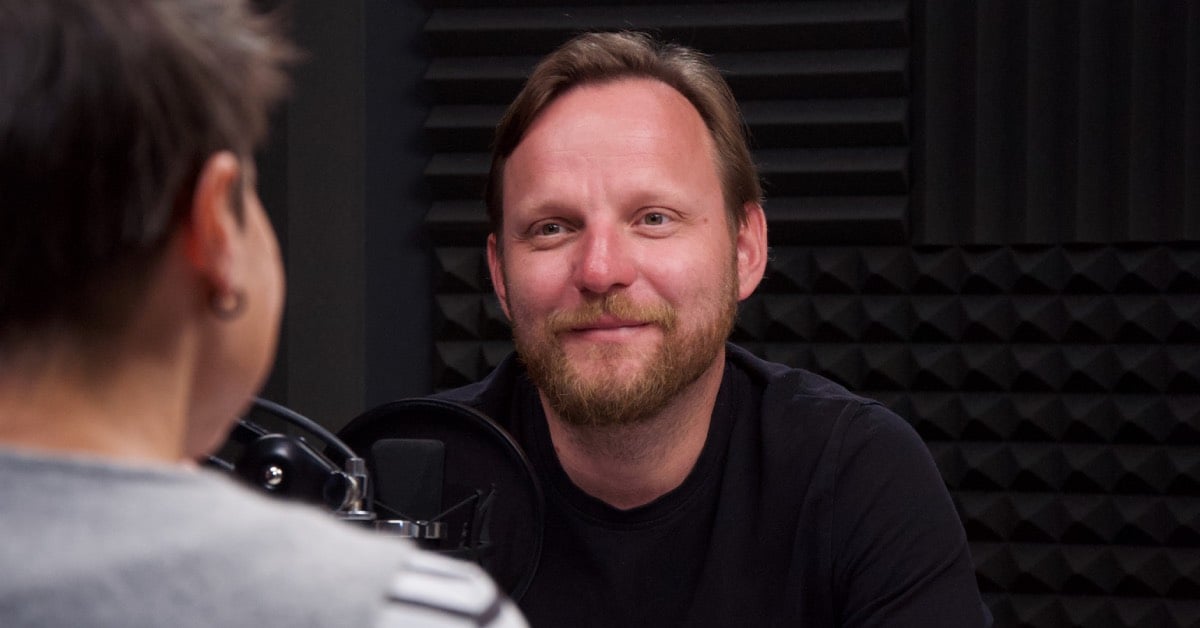
Chris‑Markus “CMK” Kratz, AWS Global Director of Automotive and Manufacturing, explains how outcome‑first, customer‑obsessed transformation and ecosystem partnerships are reshaping the industry. He details the shift to software‑defined vehicles and the car as a proactive companion, how GenAI is collapsing mainframe refactoring from years to months, and what it takes to move beyond pilots to production. Kratz shares lessons from Amazon’s own “shop floor” in its fulfillment centers, why the cloud is ready for OT, and why critical thinking and change management matter as much as technology. He also covers autonomy at scale, the equalizing effect of AI for SMBs and OEMs alike, and the “better together” role of SIs like Adastra.
- How do OEMs and suppliers work backwards from outcomes to deploy GenAI in real production?
- What makes the factory floor ready for cloud and AI, and how do you ensure resilience?
- How does mainframe modernization unlock microservices and accelerate transformation?
- Which ecosystem partnerships and governance practices deliver value without slowing execution?
- Is AI the great equalizer across company sizes, and how should leaders manage the cultural shift?
Watch the interview
Listen to the podcast:
Read the podcast as an interview
(The interview was shortened and edited using ChatGPT)
Mark Kohout: Hello and welcome to the Adastra podcast. I’m Mark Kohout, and I lead the Governance practice at Adastra, a global data, AI, and cloud systems integrator. We’re coming to you from Las Vegas during AWS re:Invent 2025. Joining me is Chris‑Markus Kratz, AWS Global Director of Automotive and Manufacturing, better known as CMK. There’s a story behind that nickname.
Chris‑Markus Kratz (CMK): Thanks for having me. re:Invent is always energizing. The CMK story goes back to when I joined AWS in 2016. We had so many Christophs, Christians, and Chrises that when someone said “Chris,” a bunch of people looked up. We adopted abbreviations. Mine stuck and became my brand. Even our CEO calls me CMK.
Mark Kohout: Very AWS, and very on brand. CMK, your business unit leads AWS’s work with strategic OEMs, delivering reliable, scalable, cost‑effective cloud services. With your background in business information systems and a decade in international sales and management at IBM, you bring deep experience in digital and cultural transformation for clients like BMW Group, Mercedes‑Benz, and Volkswagen. Thanks for making time during a busy week.
Chris‑Markus Kratz (CMK): Happy to be here.
Mark Kohout: Let’s start at 40,000 feet. What’s unique about AWS’s work with automotive and manufacturing, and what are you focused on in 2025?
Chris‑Markus Kratz (CMK): When I joined, AWS had strong horizontal cloud services but limited industry focus. Automotive and manufacturing require deep domain knowledge and a clear understanding of OT versus IT, especially on the shop floor. I was asked to learn what matters to the industry and what we should build into AWS services to make them truly useful.
We co‑develop with customers and “work backwards,” one of Amazon’s leadership principles rooted in customer obsession. We start with business outcomes and objectives, not technology. Once the problem is concrete, the tech follows. In the age of AI, a lot is solvable, but only if you begin with a clear business challenge.
Mark Kohout: So you meet customers where they are, becoming a sparring partner on business before technology.
Chris‑Markus Kratz (CMK): Exactly. Customers can use AWS without talking to us. Our value is understanding their requirements and goals so we can help achieve outcomes, not just provide infrastructure.
Mark Kohout: What trends are reshaping the automotive segment, and how are OEMs and suppliers using AWS to reinvent themselves?
Chris‑Markus Kratz (CMK): First, partnership. We do not see ourselves as a supplier. We aim to be a trusted advisor. The challenges are too big to solve alone, so OEMs, GSIs, ISVs, and the broader ecosystem have to work together. That’s a major shift from the old supplier model to eye‑to‑eye partnerships with tech.
Second, the product is becoming software‑defined and experience‑led. The car is essentially a smartphone on wheels, an extension of your living room. OEMs still build incredible vehicles, but customer experience now dominates. Preferences vary by generation and region. Amazon understands digital customer experience, and when you combine that with the industry’s ability to build and scale, you get an inflection point, digitalization at scale.
Mark Kohout: It’s multidisciplinary. Customer preferences feed product design, which then influences manufacturing long before the shop floor.
Chris‑Markus Kratz (CMK): Exactly. The entire value chain is affected, from design and production to the vehicle lifecycle.
Mark Kohout: Let’s get into use cases. How are AI, GenAI, and agentic AI being deployed to production in automotive, both in the product and in processes?
Chris‑Markus Kratz (CMK): On the product side, the car is becoming a proactive companion, anticipating your next move. BMW, for example, has integrated Alexa into its Neue Klasse vehicles to enable voice‑driven experiences.
On the process side, think legacy modernization. I started on the mainframes. They are monoliths with tribal knowledge, undocumented code, and scarce developers. Companies feared touching core processes because projects could take 10 to 15 years and cost a lot. Now, with GenAI, software development tasks can be automated. At re:Invent, we showed that you can automate aspects of mainframe offloading and code refactoring, compressing years into months and enabling microservices and process reinvention at scale.
Mark Kohout: That applies broadly to legacy industries built around powerful but inflexible monoliths.
Chris‑Markus Kratz (CMK): It does. GenAI is transformative. We cannot predict everything, but roles, operations, and knowledge cycles are changing fast. Knowledge that lasted five to ten years now turns over in a few. With AI, it is even faster. Companies want to capture expert know‑how into algorithms and agents. Critical thinking, questioning outputs and relearning quickly, becomes essential.
Mark Kohout: And that demands strong change management. You are also implying a feedback loop. GenAI changes information architecture, which then reshapes business architecture.
Chris‑Markus Kratz (CMK): Matt Garman highlighted this. Critical thinking is increasingly vital. I use GenAI daily with our internal tool suite, but I still ask if the output makes sense. That discipline matters.
Mark Kohout: Does AI adoption differ for SMBs versus the largest OEMs and tiered suppliers?
Chris‑Markus Kratz (CMK): It is largely the same journey. Size matters less than mindset. Large enterprises need governance and boundaries, while smaller firms can move faster thanks to simpler decisions. The patterns are similar.
Mark Kohout: Any other innovative projects where AWS is driving change in manufacturing?
Chris‑Markus Kratz (CMK): Software‑defined vehicles are a big one. We co‑developed frameworks and services with automakers. Autonomous driving is another. Early predictions underestimated the need for massive, cost‑effective compute and storage. We worked with the industry, building platforms like the one with BMW, to make autonomy more feasible.
Next, the shop floor. It is the heartbeat of manufacturers, and people were reluctant to touch it because production is business‑critical. GenAI opens new capabilities to augment or rebuild MES and SCADA and OT systems. That is the next transformation.
We are excited because Amazon runs its own production at global scale, our fulfillment centers. From order to packaging to shipping, it is production, fully operated on AWS. When we take OEMs on site visits, the first question is “Where is the server room?” There is not one. It runs in the cloud. A few years ago, people said you could not run a factory from the cloud due to connectivity and downtime risks. That debate is over.
Mark Kohout: I have never thought of Amazon as a manufacturer, but that is compelling and must make peer‑to‑peer conversations easier.
Chris‑Markus Kratz (CMK): We are a learning organization with a Day 1 mindset, always asking if we are doing the right thing in the right way. Amazon has used ML and AI for about 20 years. Our robots generate massive data daily. We train models at that scale and then externalize the benefits through AWS AI services. So we understand production at scale and how to apply AI in manufacturing.
Mark Kohout: CMK, I accuse you of thinking in synergies.
Chris‑Markus Kratz (CMK): Absolutely.
Mark Kohout: Because Adastra is an AWS partner, before we wrap, what role do consulting partners play in helping automotive clients execute complex programs on AWS? What qualities do you look for in SI or ISV partners?
Chris‑Markus Kratz (CMK): We value partnering with Adastra across customers like ABB and others. It does not work alone. Ecosystem partners are essential to solve industry challenges. Customers always choose their partners. AWS may offer perspectives, but the decision is theirs.
We look for partners with deep domain expertise that complements AWS’s horizontal platform and technology. That combination delivers real value. Better together.
Mark Kohout: Better together indeed. CMK, thanks for taking time out of a busy week to share how partnerships enable automotive manufacturers to transform. Have a great re:Invent, and please come back to show us the future shop floor. To our audience, if your team wants a low‑risk first step in AI transformation, reach out to Adastra and let’s make it happen together. If you found this useful, like and subscribe. So long from Las Vegas.