Podcast
“It’s Not About Replacing People, It’s About Empowering People,” says Kevin Harmer, Chief Cloud Officer at Adastra
January 8, 2026
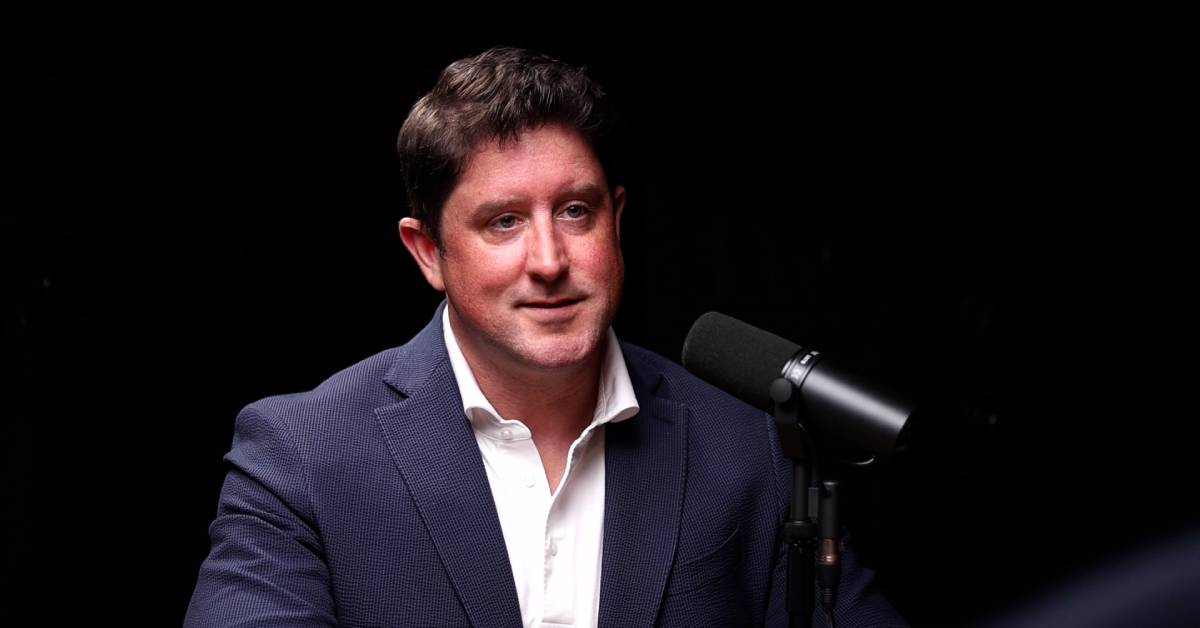
Kevin Harmer, Chief Cloud Officer at Adastra, demystifies Agentic AI and how it frees teams from repetitive work to focus on higher-value outcomes. He lays out a three-horizon path, from decision insights to decision augmentation to enterprise-scale decision automation, with managed autonomy, human-in-the-loop controls, and confidence thresholds. Harmer explains how to move beyond personal productivity tools like Copilot to an enterprise agent framework and catalog (e.g., a reusable KYC agent), and a three-step program: strategy and process mining, lighthouse proof, and a governed platform for scale. He shares real-world results, including invoice automation saving 200,000 hours annually, a revenue cycle management “agentic workforce” that cuts costs and accelerates payments, and “Happier Trucks” logistics that reduce empty space and boost revenue with route-aware sales recommendations.
- What does it take to move from insights and recommendations to trusted, enterprise-scale automation?
- When is “good enough” data enough, and how can agents surface gaps and improve accuracy over time?
- Which governance, operating model, and change practices build trust without slowing execution?
Watch the interview
Listen to the podcast
Read the podcast as an interview
(The interview was shortened and edited using ChatGPT)
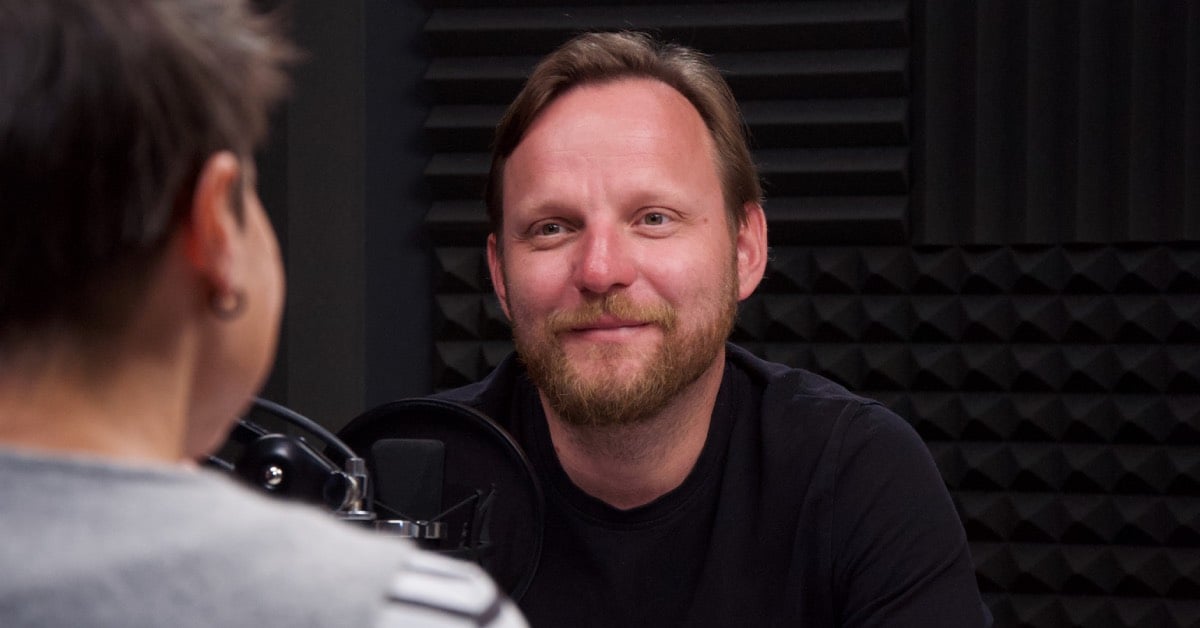
Mark Kohout: Agentic AI is the next technology frontier in the AI revolution, promising productivity gains we’re only starting to imagine. What does it mean, and how do we get started? Welcome to the Adastra podcast on Agentic AI, where we’ll unpack what it is, what transformation looks like, and how to begin. My name is Mark Kohout, and I lead the governance practice at Adastra North America. It’s my pleasure to introduce my friend and guest, Kevin Harmer, Adastra’s Chief Cloud Officer. Kevin is a 30-year industry veteran and has spent 16 years at Adastra, leading the agentic transformation charge with our customers. He’s also a powersports enthusiast and an avid if currently slightly disappointed Toronto Blue Jays supporter.
Kevin Harmer: Always next year.
Mark Kohout: Hope springs eternal, right? Kevin joins me today in our Toronto studio to cut through the noise and hype around Agentic AI. Welcome great to have you here.
Kevin Harmer: Great to be here, Mark. I love talking agents.
Mark Kohout: Let’s start at the beginning. What is Agentic AI, and why are organizations turning to it? We’ve had years of predictive models and machine learning, and more recently large language models. What does Agentic AI add?
Kevin Harmer: Agentic AI frees people from repetitive, lower-value work so they can focus on higher-value thinking, collaboration, and innovation. If agents can automate the 50–75% of tasks that are routine and require light reasoning, organizations can unlock human potential for more impactful work.
Mark Kohout: So we devolve routine work to technology and redeploy human skills to higher-value parts of the business.
Kevin Harmer: Exactly. I think of agentic transformation in three horizons:
Horizon 1: Decision insights extracting insights from organizational data, both structured (data lakes, warehouses) and unstructured (documents, images, video).
Horizon 2: Decision augmentation using those insights to recommend actions.
Horizon 3: Decision automation executing those actions at scale with oversight.
Mark Kohout: As a governance guy, that suggests a need to get things like SharePoint and documents under control.
Kevin Harmer: Curated, well-organized data helps, but you don’t need perfect data to start. With the right framework, agents can surface the best available data and deliver useful insights for Horizon 1. For example, a customer 360 built from CRM history, surveys, and product interactions.
Mark Kohout: And that foundation sets up Horizon 2. We’re seeing LLMs do inference and generation for discovery and interpretation. Is that the idea?
Kevin Harmer: Yes. A simple public example of a Horizon 1 insight agent is ChatGPT. Enterprises need private, secure versions on their own data. Horizon 2 then uses those insights to recommend actions think next-best offer for cross-sell or upsell by correlating a customer’s profile with historical outcomes.
Mark Kohout: How does that differ from traditional ML deterministic models versus probabilistic LLMs?
Kevin Harmer: It’s not either/or. Horizon 2 agents can embed both deterministic ML outputs and probabilistic LLM recommendations. The key is trust: you don’t start at Horizon 2. You prove your insights in Horizon 1 first, then use them to power reliable action recommendations in Horizon 2.
Mark Kohout: Which brings us to Horizon 3 automation at scale.
Kevin Harmer: Right. Horizon 3 is decision automation: executing recommended actions across millions of customers. For example, if Horizon 2 identifies the best upsell opportunity, Horizon 3 generates and orchestrates omnichannel communications to realize that revenue. At this scale, you need human-in-the-loop controls, confidence thresholds, monitoring, and product-like experiences to manage automation. It’s less about a ChatGPT-style interaction and more about governed, scalable execution with oversight.
Mark Kohout: As you move through horizons, organizational readiness and trust become critical risk management, transparency, explainability, data sensitivity and agents operate with managed autonomy.
Kevin Harmer: Exactly. Consider Microsoft Copilot: great for personal productivity creating, summarizing, researching. But if you want an enterprise SOP generator that ingests documents, images, and videos from across the company to standardize maintenance procedures, you need more horsepower and orchestration true agentic automation with governance.
Mark Kohout: That leads to AI governance risk, resilience, and personal data. Most organizations start with personal productivity tools like Copilot, then face the challenge of institutionalization: controls, transparency, documentation, and bias mitigation.
Kevin Harmer: Agreed. We see successful agentic transformation as three steps:
Strategy: Identify high-value opportunities through process mining where people spend time and where automation with reasoning could help.
Prove it: Validate outcomes on a lighthouse use case. For instance, one customer pays 50,000 invoices annually. By automating manual steps with inference and maintaining human approvals, we saved four hours per invoice 200,000 hours per year while preserving auditability.
Framework: Implement an agent framework an agent catalog with reusable, trustworthy, system-of-record agents. For example, a Know Your Customer (KYC) agent that both sales and marketing can use. The framework must be secure, governed, self-monitoring, bias-aware, and data-secure.
Mark Kohout: That addresses governance and risk. We’re finding AI governance is less a paper exercise and more about pragmatic implementation within tools. There are standards like ISO 42001 and risk frameworks, but the real trick is making governance work in deployments.
Kevin Harmer: Exactly. You can borrow the DNA from data governance and other frameworks. Establish decision structures, processes, and intake mechanisms that fit your tools and workflows.
Mark Kohout: Theory is great what’s the reality? Where are companies today, and what hurdles do they face moving across horizons?
Kevin Harmer: Most are piloting Horizon 1: decision support agents that surface insights on demand, reducing reliance on a proliferation of Power BI dashboards. Accuracy is the challenge hallucinations and misinterpretations. Our prescriptive, business-context approach using well-cataloged, purpose-built agents and an agent-of-agents methodology can raise insight accuracy from ~80% to 99%+. A concrete example: revenue cycle management (RCM). RCM providers sit between hospitals and insurers. Historically, a team of 500 handled tasks: transcribing doctor notes, templating clinical notes, updating the hospital’s PMS, selecting insurance codes, submitting claims, and handling insurer pushbacks. We implemented an agent framework with about 100 agents to automate these steps. Instead of 500 “people bosses,” they now operate with 50 “agent bosses,” reducing costs, accelerating payments from months to weeks, and differentiating their service.
Mark Kohout: An agentic workforce.
Kevin Harmer: Exactly. And it’s not about replacing people; it’s about empowering teams to focus on higher-level work while agents handle manual, lower-value tasks.
Mark Kohout: Beyond technology, what about people and processes? How does change management factor in? Do you bring business and technology stakeholders together from the outset?
Kevin Harmer: You have to address four perspectives: people, process, policy, and platform. Agentic transformation is process re-engineering, and that impacts roles and routines. Enable the change with training, clear governance, and supportive tools. Another example: “Happier Trucks.” Previously, logistics teams spent most of the day planning next-day routes, leaving sales two hours in the afternoon to scan routes and upsell or cross-sell to nearby customers reducing truck “white space” from 20% to 18%. With agents, the optimal logistics plan is ready at 7 a.m. The sales recommender agent identifies the highest-propensity opportunities along each route, and sales has the full day to act. White space drops to 10%+, and people work differently: the plan is early, and the agent suggests who to call, what to say, and what to offer.
Mark Kohout: So we get process efficiencies and a leap in data-driven decision-making.
Kevin Harmer: Exactly enabled by agents.
Mark Kohout: Final question: How should business leaders get started?
Kevin Harmer: Follow the three steps. First, identify opportunities across departments or with a champion department. At Adastra, we run an Agentic AI Day workshop to map the art of the possible, gather ~200 ideas, and narrow them to the top five based on value, confidence, and effort, with a roadmap to execute. Second, choose a lighthouse use case and prove it. Third, implement the agent framework and scale often building on existing Horizon 1 and 2 efforts to reach Horizon 3.
Mark Kohout: Start small but meaningful, prove value, then scale across processes and the business architecture.
Kevin Harmer: Exactly. Even if you’ve already started, the focus is how to reach Horizon 3 with governance and reuse.
Mark Kohout: Kevin, we could talk for hours, but we’ll leave it there. Thanks for your time this was insightful. And to our audience, thanks for joining this Adastra podcast. If you found it useful, please like and subscribe. See you next time.